




This Book is Out of Stock!
by



Hardback
₹12782
₹15788
19.04% OFF
(All inclusive*)
Delivery Options
*COD & Shipping Charges may apply on certain items.
Review final details at checkout.
Looking to place a bulk order? SUBMIT DETAILS

Piracy-free

Assured Quality

Secure Transactions
About The Book
Description
Author
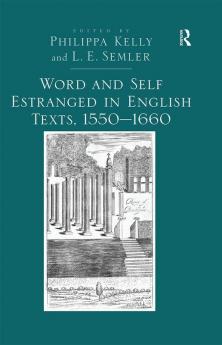
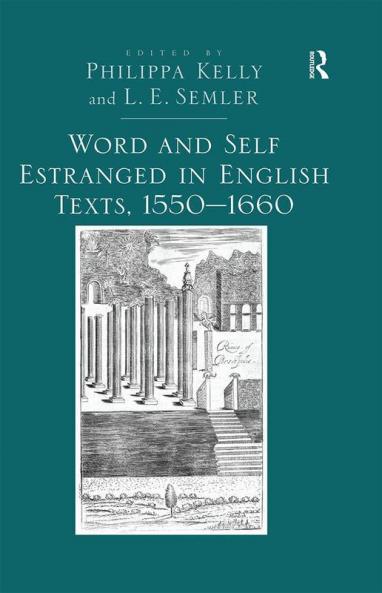
The essays in Word and Self Estranged in English Texts, 1550-1660, consider diverse historical contexts for writing about 'strangeness'. They draw on current practices of reading to present contrasts and analogies within and between various social understandings. In so doing they reveal an interplay of thematic and stylistic modes that tells us a great deal about how, and why, certain aspects of life and thinking were 'estranged' in sixteenth and seventeenth century thinking. The collection's unique strength is that it makes specific bridges between contemporary perspectives and early modern connotations of strangeness and inhibition. The subjects of these essays are 'strange' to our ways of thinking because of their obvious distance from us in time and culture. And yet, curiously, far from being entirely alien to these texts, some of the most modern thinking-about paradigms, texts, concepts-connects with the early modern in unexpected ways. Milton meets the contemporary 'competent reader', Wittgenstein meets Robert Cawdrey, Shakespeare embraces the teenager, and Marvell matches wits with French mathematician René Thom. Additionally, the early modern texts posit their own 'others', or sites of estrangement-Moorishness, Persian art, even the human body-with which they perform their own astonishing maneuvers of estrangement and alignment. In reading Renaissance works from our own time and inviting them to reflect upon our own time, Word and Self Estranged in English Texts, 1550-1660 offers a vital reinterpretation of early modern texts. Contents: Introduction: word and self estranged: topographies on meaning in early modern England, Philippa Kelly and L.E. Semler; Part 1 The Two-Way Mirror: the Natural and the Strange: Wittgenstein and early English dictionaries, 1604-1658, Julian Lamb; The ruins of Persepolis: grotesque perception in Thomas Herbert's Travels, L.E. Semler; Intimate converse with nature: body and touch in Harvey's way of inquiry, Alan Salter; Dipsas and traditions of the serpent-woman in early modern literature, Alison V. Scott. Part 2 Shakespeare's Estranged Words: Shakespeare and authenticity: teaching the real thing, Jean E. Howard; Estranging word and self in Twelfth Night, R.S. White; Desdemona's wooing: towards a pre-1538 Othello, Lawrence Warner; A mind diseased: reading Lady Macbeth's madness, Chris Couche. Part 3 Re-Sounding Words: Topographies of space, time and disciplinarity in early modern English: the case of Andrew Marvell, Bob Hodge; The text estranged: topographies of irony in Chaucer and Milton, Ronald Bedford; Sounds of elevation in Paradise Lost: God's commendation of Abdiel, William Walker; By the rivers of Babylon: Biblical allusion and the politics of pastoral in Izaak Walton's The Compleat Angler, Kirsten Tranter; 'Transitory hieroglyphiques': deaf people and signed communication in early modern theories of language, Susannah Macready; Index.
Piracy-free
Assured Quality
Secure Transactions
*COD & Shipping Charges may apply on certain items.
Review final details at checkout.
₹12782
₹15788
19% OFF
Hardback
Out Of Stock
All inclusive*
Details
ISBN 13
9781409400370
Publication Date
-28-09-2010
Pages
-244
Weight
-445 grams
Dimensions
-156x234x14.54 mm
