




This Book is Out of Stock!
by



Paperback
₹3104
₹3791
18.12% OFF
(All inclusive*)
Delivery Options
*COD & Shipping Charges may apply on certain items.
Review final details at checkout.
Looking to place a bulk order? SUBMIT DETAILS

Piracy-free

Assured Quality

Secure Transactions
About The Book
Description
Author
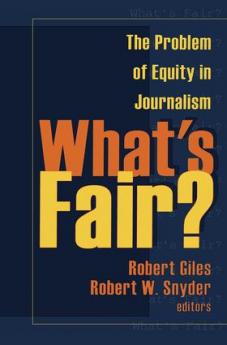
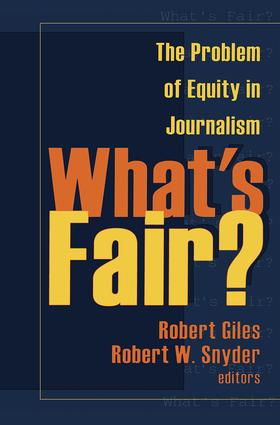
What's fair? It is an old question in journalism. In 1999 it seems more difficult to answer than ever. The cycle of story spin and counterspin that surrounds the White House is only the most obvious part of the problem. In the past 25 years the practice of journalism has changed enormously--particularly in the United States. The demarcation of public and private life that once ruled certain kinds of stories out-of-bounds has eroded leaving reporters with the unenviable challenge of having to cover events whose seaminess inevitably taints all who touch them. Commercial pressures and a tidal wave of information and entertainment media have engulfed the news business--leaving the definitions of journalism and journalistic standards vague and uncertain. And the technology of news reporting is speeding up news cycles in ways that leave little time for sober and measured judgments.What's Fair? is a collection of essays from experts in the field that are sure to spark compelling questions and ideas about journalism and its place in our time. In Fairness--A Struggle journalists explore a subject that they normally share only with close friends and colleagues--their own struggles with fairness that occurred in places as different as South Africa Washington and the South Bronx. In Fairness--A History nine contributors examine the history of the fairness question specifically the establishment of the Hutchins Commission report of 1947 which is evaluated here by a historian a journalist and a First Amendment authority. In a comparative vein two authorities on international communications law examine British regulations for fairness in broadcasting at the end of the 20th century. In Fairness--A Goal contributors explore what struggles for fairness mean in a variety of contexts from American newsrooms to post-Communist Poland to Northern Ireland.Many discussions of fairness are either numbingly abstract or impossibly righteous. To avoid those hazards Robert Giles and Robert Snyder have grounded this volume in stories--the kind of stories journalists tell each other and the kind of stories people tell about journalism. This volume is a testament to journalism that is free yet fair probing yet credible and authoritative in content yet open to many voices.Robert Giles is editor-in-chief of Media Studies Journal senior vice president of the Freedom Forum and executive director of Media Studies Center. Formerly the editor and publisher of The Detroit News he is the author of Newsroom Management: A Guide to Theory and Practice.Robert W. Snyder is editor of the Media Studies Journal a historian and most recently author of Transit Talk: New York's Bus and Subway Workers Tell Their Stories. He has taught at Princeton University and New York University from which he holds a doctorate in history.
Piracy-free
Assured Quality
Secure Transactions
*COD & Shipping Charges may apply on certain items.
Review final details at checkout.
₹3104
₹3791
18% OFF
Paperback
Out Of Stock
All inclusive*
Details
ISBN 13
9780765806161
Publication Date
-31-07-1999
Pages
-184
Weight
-258 grams
Dimensions
-152x229x10.05 mm
