





This Book is Out of Stock!
by



Paperback
₹5213
(All inclusive*)
Delivery Options
*COD & Shipping Charges may apply on certain items.
Review final details at checkout.
Looking to place a bulk order? SUBMIT DETAILS

Piracy-free

Assured Quality

Secure Transactions
About The Book
Description
Author
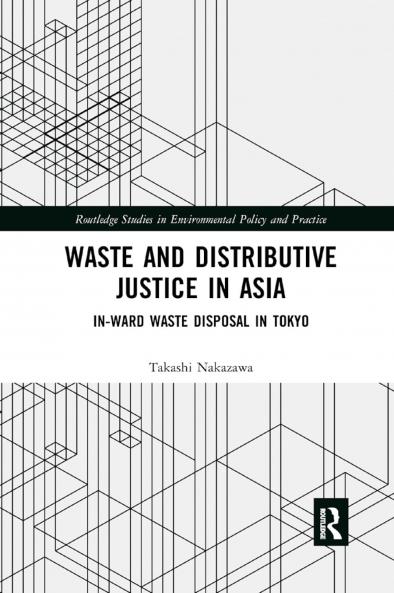
<p>Conflicts over waste disposal facility siting is a pressing issue not only in developed countries but also in fast-growing countries that face drastic waste increase and rapid urbanisation. How to address distributive justice has been one of the biggest concerns.</p><p></p><p>This book examines what determines the influence of distributive justice in siting policy. In the 23 wards of Tokyo one idea of distributive justice known as In-Ward Waste Disposal (IWWD) emerged amid the ongoing garbage crisis in the early 1970s. IWWD was adopted as a significant principle but its influence waxed and waned over time until the idea was finally abandoned in 2003.</p><p></p><p>To unravel causes and mechanisms behind the changing influence of IWWD this book adopts a framework that considers not only ideational causes but also the power struggles between rationally calculating actors as well as the influence of external events and environments. By combining an in-depth case study with an integrative theoretical framework this book tells a thought-provoking story of the changing influence of IWWD in a deep comprehensive and consistent way. This book provides significant insights and lessons for both academics and practitioners.</p>
Piracy-free
Assured Quality
Secure Transactions
*COD & Shipping Charges may apply on certain items.
Review final details at checkout.
₹5213
Out Of Stock
All inclusive*
Details
ISBN 13
9780367891510
Publication Date
-12-12-2019
Pages
-176
Weight
-259 grams
Dimensions
-155.96x233.93x9.64 mm
