





This Book is Out of Stock!
by
English




Paperback
₹3824
₹4739
19.31% OFF
(All inclusive*)
Delivery Options
*COD & Shipping Charges may apply on certain items.
Review final details at checkout.
Looking to place a bulk order? SUBMIT DETAILS

Piracy-free

Assured Quality

Secure Transactions
About The Book
Description
Author
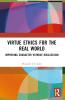
<p>In <i>Virtue Ethics for the Real World: Improving Character without Idealization</i> Howard J. Curzer argues that character ideals seduce virtue ethicists into counterintuitive claims mislead and psychologically harm people seeking to improve their characters and sometimes become tools for exploitation. Curzer offers a theory of Aristotelian virtue ethics that eschews idealization and that harmonizes with common sense. To explain the many dilemmas of ordinary life he allows that different virtues sometimes enjoin incompatible actions and even enjoin actions that conflict with duty. Curzer defends the doctrine of the mean arguing that idealized traits such as unilateral forgiveness universal civility unconditional commitments and unlimited generosity are not virtues. He shows that the reciprocity of virtues doctrine depends upon idealization and rejects it. </p><p>When undergirding his theory Curzer wears several hats. He is a eudaimonist when grounding virtue a constructivist when grounding value and a perspectivist (a la Nietzsche) when grounding virtuous action. </p><p>How can people improve without aiming at an ideal? Curzer offers an individualized approach to character improvement modeled on contemporary medicine. First diagnose each person’s character flaws. Then tailor treatment plans to each flaw. An important tool is a fine-grained table of the components of character their failure modes and corresponding therapies. Curzer provides the beginnings of such a table.</p>
Piracy-free
Assured Quality
Secure Transactions
*COD & Shipping Charges may apply on certain items.
Review final details at checkout.
₹3824
₹4739
19% OFF
Paperback
Out Of Stock
All inclusive*
Details
ISBN 13
9781032425481
Publication Date
-26-08-2024
Pages
-272
Weight
-372 grams
Dimensions
-151.89x229.11x14.57 mm
