




This Book is Out of Stock!
by



Hardback
₹6517
(All inclusive*)
Delivery Options
*COD & Shipping Charges may apply on certain items.
Review final details at checkout.
Looking to place a bulk order? SUBMIT DETAILS

Piracy-free

Assured Quality

Secure Transactions
About The Book
Description
Author
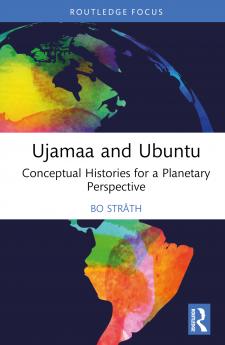
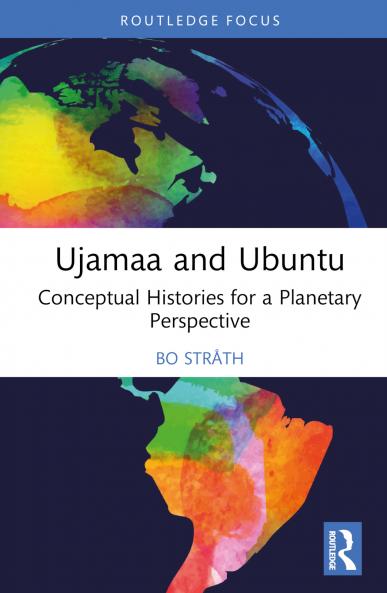
<p>For over a decade the world has experienced an accelerating erosion of a language that took hundreds of years to emerge. It is a language ordering time and space with words such as enlightenment reason rationality modernization and the most recent by-word globalization. However it is a language that has been accompanied by colonialism imperialism racism the exploitation of people and nature an unequal distribution of the world’s resources pogroms genocides and world wars. There has been a gap between assumptions underlying a visionary ambition and the often-brutal practices that have accompanied it. Moreover it is a language that expresses European values with the implicit or explicit suggestion that they pertain to the whole world a civilizing mission from a European centre. Although the established narrative argued that there was continuous progress it was a conclusion reached through hindsight. The idea of progress had to be repeatedly recreated through new visionary projects that attempted to live up to the high ideals their predecessors failed to achieve.</p><p>Against the backdrop of this meta-normative point of departure the book argues that a convincing grand narrative has failed to materialize since the discrediting of globalization. In the search for a new narrative it argues at a meta-normative level for a reformulation of the term ‘global’ away from its close connection to the globe as an unbounded self-propelling market that exists beyond human influence. ‘Global’ should no longer be reduced to auto-playing market fiction but instead be connected to the planet Terra the Earth. With reference to Latour and Chakrabarty ‘global’ and ‘planetary’ mean cohabitation; life on earth is seen as an infinite symbiotic system nurtured and protected but also destroyed by human action.</p><p>The book argues that a new conceptualization of ‘the global’ and ‘the planet’ requires input from African and Asian language cultures. The book explores in depth the history of the two political African key concepts of <i>ujamaa </i>and <i>ubuntu </i>and argues that they are cases showing how work on a new global/planetary narrative might look. The investigation of the two concepts demonstrate that translations are juxtapositions that point up what is shared and what isn’t between concepts in two or more languages. The point of comparison is not to develop a uniform global perspective even if that were possible but to develop a global understanding of difference and through that to begin to look for a common ground. Translations of political key concepts are the source of a growing understanding of difference.</p>
Piracy-free
Assured Quality
Secure Transactions
*COD & Shipping Charges may apply on certain items.
Review final details at checkout.
₹6517
Out Of Stock
All inclusive*
Details
ISBN 13
9781032641515
Publication Date
-15-12-2023
Pages
-116
Weight
-269 grams
Dimensions
-155.96x233.93x7.96 mm
