





This Book is Out of Stock!
by



Paperback
₹1887
₹2369
20.35% OFF
(All inclusive*)
Delivery Options
*COD & Shipping Charges may apply on certain items.
Review final details at checkout.
Looking to place a bulk order? SUBMIT DETAILS

Piracy-free

Assured Quality

Secure Transactions
About The Book
Description
Author
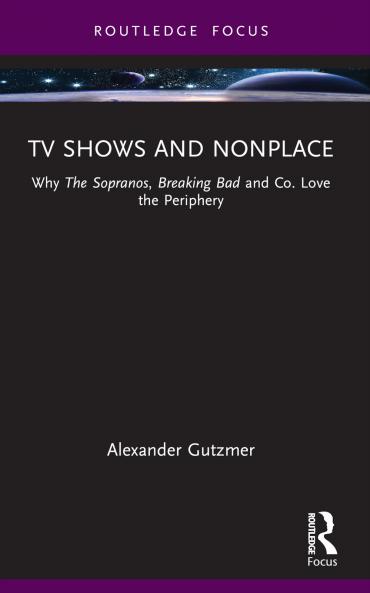
<p>This book scrutinizes the relationship between contemporary TV shows and space focusing on the ways in which these shows use and narrate specific spatial structures namely spaces far away from traditional metropolises.</p><p>Beginning with the observation that many shows are set in specific spatial settings referred to in the book as “nonplace territories” – e.g. North Jersey New Mexico or rural and suburban Western Germany – the author argues that the link between such nonplace territories and shows such as <em>The Sopranos</em> <em>Breaking Bad</em> or <em>Dark </em>is so intense because the narrative structure functions similarly to these territories: flat decentralized without any sense of structure or stable hierarchy. The book takes three different perspectives: first it looks at the rationale for combining TV shows and nonplace territories from the viewpoint of narrative strategy. It then thinks through what these strategies mean for practicing architects. Finally it approaches the arguments made before from a “user” perspective: what does this narrative mirroring of social-spatial reality in places such as Albuquerque or Jersey City mean for people living in these places?</p><p>This new approach to architecture and space on screen will interest scholars and students of television studies screen architecture media and architectural theory and popular culture.</p>
Piracy-free
Assured Quality
Secure Transactions
*COD & Shipping Charges may apply on certain items.
Review final details at checkout.
₹1887
₹2369
20% OFF
Paperback
Out Of Stock
All inclusive*
Details
ISBN 13
9781032593487
Publication Date
-19-12-2024
Pages
-96
Weight
-122 grams
Dimensions
-137.92x215.9x5.53 mm
