





This Book is Out of Stock!
by
English




Paperback
₹3859
₹4739
18.57% OFF
(All inclusive*)
Delivery Options
*COD & Shipping Charges may apply on certain items.
Review final details at checkout.
Looking to place a bulk order? SUBMIT DETAILS

Piracy-free

Assured Quality

Secure Transactions
About The Book
Description
Author
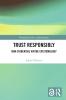
<p>This book offers a defence of Wrightean epistemic entitlement one of the most prominent approaches to hinge epistemology. It also systematically explores the connections between virtue epistemology and hinge epistemology.</p><p>According to hinge epistemology any human belief set is built within and upon a framework of pre-evidential propositions – hinges – that cannot be justified. Epistemic entitlement argues that we are entitled to trust our hinges. But there remains a problem. Entitlement is inherently unconstrained and arbitrary: We can be entitled to any hinge proposition under the right circumstances. In this book the author argues that we need a non-arbitrariness clause that protects entitlement from defeat. This clause he argues is to require epistemic virtue. Virtuous cognitive dispositions provide the non-arbitrariness clause that protects entitlement from defeat. The epistemic character of the agent who holds a particular set of hinges tells us something about the hinges’ epistemic status. Conversely epistemic virtues are cognitive dispositions and capacities that rely on hinge propositions – without trusting in some hinges we would be unable to exercise our virtues.</p><p><i>Trust Responsibly</i> will appeal to scholars and advanced students working on epistemology Wittgenstein and virtues.</p><p>The Open Access version of this book available at www.taylorfrancis.com has been made available under a Creative Commons Attribution-Non Commercial-No Derivatives (CC-BY-NC-ND) 4.0 license.</p>
Piracy-free
Assured Quality
Secure Transactions
*COD & Shipping Charges may apply on certain items.
Review final details at checkout.
₹3859
₹4739
18% OFF
Paperback
Out Of Stock
All inclusive*
Details
ISBN 13
9781032449074
Publication Date
-30-01-2025
Pages
-160
Weight
-226 grams
Dimensions
-152x229x8.82 mm
