




This Book is Out of Stock!
by
English



Paperback
₹2899
₹3554
18.43% OFF
(All inclusive*)
Delivery Options
*COD & Shipping Charges may apply on certain items.
Review final details at checkout.
Looking to place a bulk order? SUBMIT DETAILS

Piracy-free

Assured Quality

Secure Transactions
About The Book
Description
Author
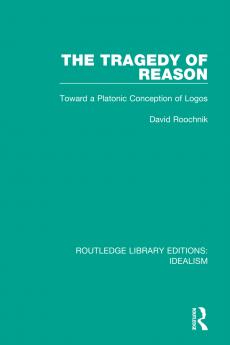
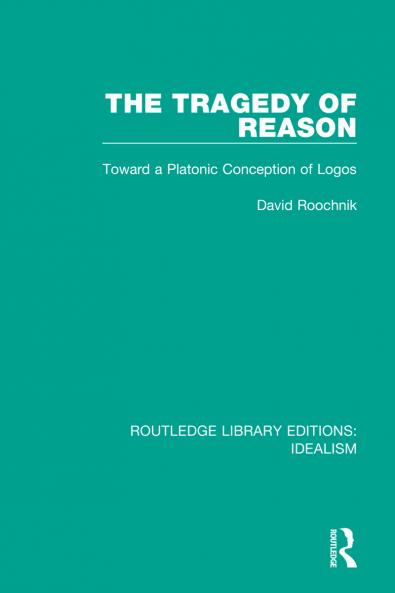
<p>The classical conception of reason (or <i>logos</i>) has been repeatedly attacked in the modern era. Its enemies range from Descartes who complains that <i>logos</i> is not sufficiently useful or precise to Derrida who hopes to liberate Western thought from its bondage to logocentrism.</p><p>At least since the time of Nietzsche Plato has been damned as the chief architect of the classical conception of <i>logos</i>. He is accused of overvaluing reason and thereby devaluing the other more human aspects of life. As it was originally formulated in Nietzsche’s <i>The Birth of Tragedy</i> Plato has been taken to be the arch-enemy of tragedy which for Nietzsche was the most life-affirming of all the art forms of Greek culture.</p><p>Originally published in 1990 <i>The Tragedy of Reason</i> defends Plato against his accusers. Employing a mode of exposition which exhibits Plato’s position Roochnik presents the Platonic conception of <i>logos</i> in confrontation with texts by Homer Hesiod Heraclitus Aristotle Descartes Porty and Derrida. In clear language unencumbered by technical terminology Roochnik shows that Platonic conception of <i>logos</i> is keenly aware of the strength of its opponents. The result is a presentation of Plato as a tragic philosopher whose conception of <i>logos</i> is characterized by an affirmation of its own limits as well as its goodness.</p>
Piracy-free
Assured Quality
Secure Transactions
*COD & Shipping Charges may apply on certain items.
Review final details at checkout.
₹2899
₹3554
18% OFF
Paperback
Out Of Stock
All inclusive*
Details
ISBN 13
9780367713003
Publication Date
-12-04-2023
Pages
-242
Weight
-350 grams
Dimensions
-156x234x13.03 mm
