




This Book is Out of Stock!
by
English



Paperback
₹3210
₹4028
20.31% OFF
(All inclusive*)
Delivery Options
*COD & Shipping Charges may apply on certain items.
Review final details at checkout.
Looking to place a bulk order? SUBMIT DETAILS

Piracy-free

Assured Quality

Secure Transactions
About The Book
Description
Author
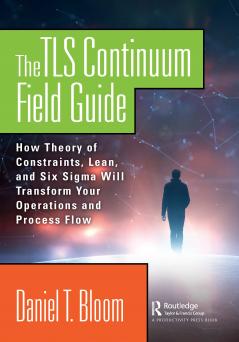
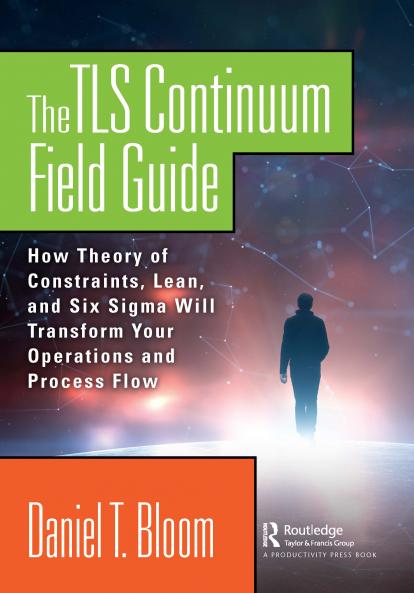
<p>This book provides a roadmap for implementing a powerful technique will reduce waste and accelerate flow within a process -- The TLS Continuum methodology.</p><p>The letters TLS stand for the three components of the continuum. The letter T stands for the Theory of Constraints. Created by Dr. Eliyahu Goldratt in his book <em>The Goal</em> it is a critically thinking-based system for determining where the obstacles lie within your organization. Through the use of various tools it asks you to determine where the obstacles are in the process. The purpose of the Theory of Constraints (TOC) involvement in the continuum is to determine what needs to be changed how to change it and how to accomplish the change. TOC operates at the level of the chain looking for the weakest link. It is in essence the hypothesis of the problem-solving method overall.</p><p>The letter L stands for Lean. Most organizations are familiar with the concept of Lean. It is centered around removing waste from the organizational processes so that the customer receives their orders faster. Understand that faster may not mean cheaper or better quality it means only that we expedite the process.</p><p>The final letter is S and it represents the concepts of Six Sigma. The primary goal here is remove variation from the processes.</p><p>If we combine the three letters of the acronym what we find that the TLS continuum is organized around a process in itself. We use the Theory of Constraints to locate and identify the obstacles within the system. What is holding up the process? Where is the weakest link in the process? With the introduction of TOC the system asks you to elevate the obstacles and determine how to remove them.</p><p>We use Lean to do what it is meant to do and that is to remove the obstacles. We have identified the obstacle and determined through the critical thinking tools how to remove that obstacle and then use the Lean tools to actually remove the waste.</p><p>Finally the system utilizes the Six Sigma tools to create the standard of work and remove any variation from the process. When we do this we have completed the improvement process by creating a progressive system for resolving the problems that occur within many organizations. It is an evidence-based effort to identify remove and improve the system so the problem does not recur.</p>
Piracy-free
Assured Quality
Secure Transactions
*COD & Shipping Charges may apply on certain items.
Review final details at checkout.
₹3210
₹4028
20% OFF
Paperback
Out Of Stock
All inclusive*
Details
ISBN 13
9780367139155
Publication Date
-28-02-2024
Pages
-272
Weight
-485 grams
Dimensions
-178x254x14.57 mm
