





This Book is Out of Stock!
by
English



Hardback
₹13179
₹16840
21.74% OFF
(All inclusive*)
Delivery Options
*COD & Shipping Charges may apply on certain items.
Review final details at checkout.
Looking to place a bulk order? SUBMIT DETAILS

Piracy-free

Assured Quality

Secure Transactions
About The Book
Description
Author
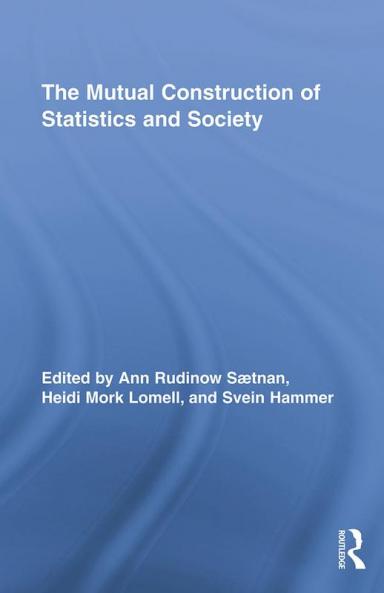
<p>Statistics are often seen as simple, straightforward, and objective descriptions of society. However, what we choose to count, what we choose not to count, who does the counting, and the categories and values we choose to apply when counting, matter. This volume addresses the ways in which statistics and numbers are gathered and applied in social science research. The contributors argue that we must become more aware of the power and the limitations of statistics. Learning statistics needs to be about more than simply mastering the techniques of using the tool; it needs to also be about learning the dangers of that tool and learning to control it within social and ethical bounds. These dangers lie in the routines through which statistics are applied; the discourses from which they emerge and into which they are deployed; the power relations created by those discourses; and the assumptions, meanings, and categories statistics carry with them in those discourses. This volume will be necessary reading for students and scholars using quantitative data within the social sciences. </p> <p>Introduction: By the Very Act of Counting: The Mutual Construction of Statistics and Society <em>Ann Rudinow Sætnan, Heidi Mork Lomell and Svein Hammer </em><strong>Section 1: Overarching Themes and Approaches</strong> 1. Numbers: Their Relation to Power and Organization <em>Jon Hovland </em>2. Words and Numbers: For a Sociology of the Statistical Argument <em>Alain Desrosières </em>3. Sociology in the Making: Statistics as a Mediator Between the Social Sciences, Practice, and the State <em>Christopher Kullenberg </em>4. Governing by Indicators and Outcomes: A Neo-Liberal Governmentality? <em>Svein Hammer </em><strong>Section 2: Visibility, Invisibility and Transparency</strong> 5. Ethnicity: Differences and Measurements <em>Ellen Balka and Kjetil Rodje</em> 6. Seeing Like Citizens: Unofficial Understandings of Official Racial Categories in a Brazilian University <em>Luisa Farah Schwartzman </em>7. Ideas in Action: ‘Human Development’ and ‘Capability’ as Intellectual Boundary Objects <em>Asun Lera St. Clair </em><strong>Section 3: Accountability and Manageability </strong>8. Labelling and Tracking the Criminal in Mid-Nineteenth Century England and Wales: The Relationship Between Governmental Structures and Creating Official Numbers <em>Chris Williams </em>9. From Categorization to Public Policy: The Multiple Roles of Electronic Triage <em>Ellen Balka </em>10. Making Sense of Numbers: The Presentation of Crime Statistics in the Oslo Police Annual Reports 1950-2008 <em>Heidi Mork Lomell </em>11. Statistics on a Website: Governing Schools by Numbers <em>Svein Hammer and Sigrunn Tvedten </em>12. Locating the Worths of Performance Indicators: Performing Transparencies and Accountabilities in Health Care <em>Sonja Jerak-Zuiderent and Roland Bal</em> <strong>Section 4: Reporting and Acts of Resistance</strong> 13. Co-Constructing Medical Diagnosis Practice and Hospital Activity Statistics: How Coding Practices Turn Patients into Numbers <em>Gunnhild Tøndel </em>14. GIS in Practice: Domestication of Statistics in Policing <em>Helene I. Gundhus</em></p>
Piracy-free
Assured Quality
Secure Transactions
*COD & Shipping Charges may apply on certain items.
Review final details at checkout.
₹13179
₹16840
21% OFF
Hardback
Out Of Stock
All inclusive*
Details
ISBN 13
9780415873703
Publication Date
-20-07-2010
Pages
-314
Weight
-515 grams
Dimensions
-152x229x18.13 mm
