




This Book is Out of Stock!
by



Paperback
₹1921
(All inclusive*)
Delivery Options
*COD & Shipping Charges may apply on certain items.
Review final details at checkout.
Looking to place a bulk order? SUBMIT DETAILS

Piracy-free

Assured Quality

Secure Transactions
About The Book
Description
Author
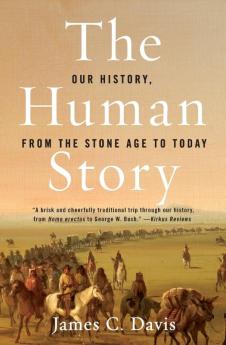
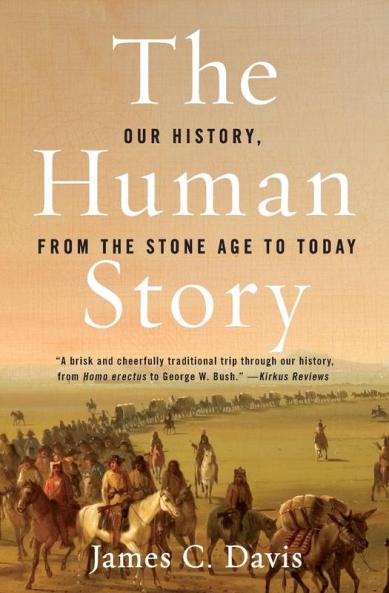
<p><strong>A brisk and cheerfully traditional trip through our history from homo erectus to George W. Bush. --<em>Kirkus Reviews</em></strong></p><p><strong>In <em>The Human Story</em> James C. Davis takes us on a journey to ancient times telling how peoples of the world settled down and founded cities conquered neighbors and established religions and continues over the course of history when they fought two nearly global wars and journeyed into space.</strong></p><p>Davis's account is swift and clear never dull or dry. He lightens it with pungent anecdotes and witty quotes. Although this compact volume may not be hard to pick up it's definitely hard to put down.</p><p>For example on the death of Alexander the Great who in a decade had never lost a single battle and who had staked out an empire that spanned the entire Near East and Egypt Davis writes: When they heard how ill he was the king's devoted troops insisted on seeing him. He couldn't speak but as his soldiers--every one--filed by in silence Alexander's eyes uttered his farewells. He died in June 323 B.C. at the ripe old age of thirty-two.</p><p>In similar fashion Davis recounts Russia's triumph in the space race as it happened on an autumn night in 1957: A bugle sounded flames erupted and with a roar like rolling thunder Russia's rocket lifted off. It bore aloft the earth's first artificial satellite a shiny sphere the size of a basketball. Its name was Sputnik meaning 'companion' or 'fellow traveler' (through space). The watchers shouted 'Off. She's off. Our baby's off!' Some danced; others kissed and waved their arms.</p><p>Though we live in an age of many doubts James C. Davis thinks we humans are advancing. As <em>The Human Story</em> ends he concludes The world's still cruel; that's understood / But once was worse. So far so good.</p>
Piracy-free
Assured Quality
Secure Transactions
*COD & Shipping Charges may apply on certain items.
Review final details at checkout.
₹1921
Out Of Stock
All inclusive*
Details
ISBN 13
9780060516208
Publication Date
-26-07-2005
Pages
-480
Weight
-553 grams
Dimensions
-140x213x30.27 mm
