


This Book is Out of Stock!
by
English









Paperback
₹4048
₹4976
18.65% OFF
(All inclusive*)
Delivery Options
*COD & Shipping Charges may apply on certain items.
Review final details at checkout.
Looking to place a bulk order? SUBMIT DETAILS

Piracy-free

Assured Quality

Secure Transactions
About The Book
Description
Author
Shoutouts
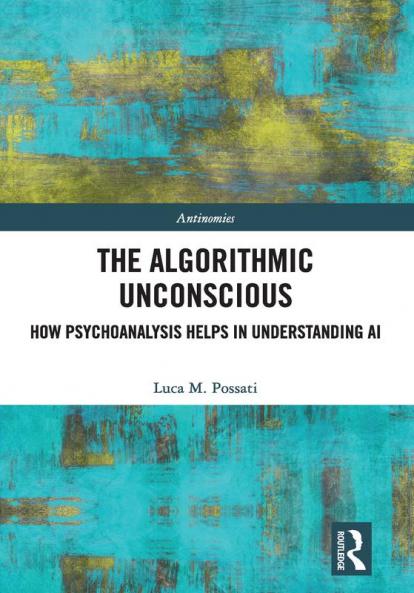
<p>This book applies the concepts and methods of psychoanalysis to the study of artificial intelligence (AI) and human–AI interaction. It develops a new more fruitful approach for applying psychoanalysis to AI and machine behavior. It appeals to a broad range of scholars: philosophers working on psychoanalysis technology AI ethics and cognitive sciences psychoanalysts psychologists and computer scientists. </p><p>The book is divided into four parts. The first part (Chapter 1) analyzes the concept of machine behavior. The second part (Chapter 2) develops a reinterpretation of some fundamental Freudian and Lacanian concepts through Bruno Latour’s actor-network theory. The third part (Chapters 3 and 4) focuses on the nature and structure of the algorithmic unconscious. The author claims that the unconscious roots of AI lie in a form of projective identification i.e. an emotional and imaginative exchange between humans and machines. In the fourth part of the book (Chapter 5) the author advances the thesis that neuropsychoanalysis and the affective neurosciences can provide a new paradigm for research on artificial general intelligence. </p><p>The Algorithmic Unconscious explores a completely new approach to AI which can also be defined as a form of therapy. Analyzing the projective identification processes that take place in groups of professional programmers and designers as well as the hidden features of AI (errors noise information biases etc.) represents an important tool to enable a healthy and positive relationship between humans and AI. Psychoanalysis is used as a critical space for reflection innovation and progress.</p>
Piracy-free
Assured Quality
Secure Transactions
*COD & Shipping Charges may apply on certain items.
Review final details at checkout.
₹4048
₹4976
18% OFF
Paperback
Out Of Stock
All inclusive*
Details
ISBN 13
9780367694050
Publication Date
-29-08-2022
Pages
-156
Weight
-232 grams
Dimensions
-155.96x233.93x8.61 mm
