




This Book is Out of Stock!
by



Paperback
₹3399
₹4265
20.3% OFF
(All inclusive*)
Delivery Options
*COD & Shipping Charges may apply on certain items.
Review final details at checkout.
Looking to place a bulk order? SUBMIT DETAILS

Piracy-free

Assured Quality

Secure Transactions
About The Book
Description
Author
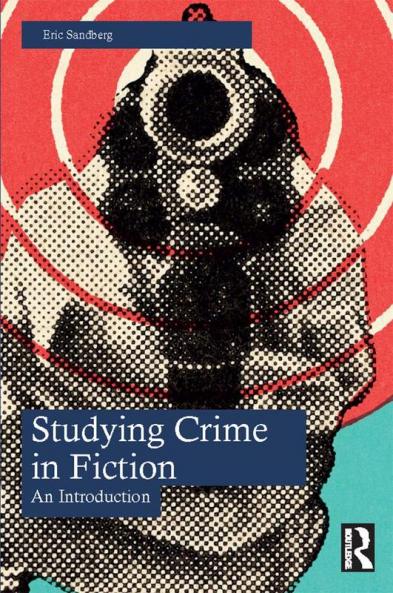
<p>The primary aim of <i>Studying Crime in Fiction: An Introduction </i>is to introduce the emerging cross-disciplinary area of study that combines the fields of crime fiction studies and criminology. The study of crime fiction as a genre has a long history within literary studies and is becoming increasingly prominent in twenty-first-century scholarship. Less attention however has been paid to the ways in which elements of criminology or the systematic study of crime and criminal behaviour from a wide range of perspectives have influenced the production and reception of crime narratives. Similarly not enough attention has been paid to the ways in which crime fiction as a genre can inform and enliven the study of criminology. Written largely for undergraduate and graduate students but also for scholars of crime fiction and criminology interested in thinking across disciplinary boundaries <i>Studying Crime in Fiction: An Introduction</i> provides full coverage of the backgrounds of the related fields of crime fiction studies and criminology and explores the many ways they are reciprocally illuminating.</p><p>The four main chapters in Section 1 (Orient You) familiarize readers with the history and contours of the broad fields within which <i>Studying Crime in Fiction: An Introduction</i> operates. It introduces the history of crime and criminology as well the history of crime fiction and the academic field dedicated to its study. In its final chapter it looks at the ways these areas of study can be conceptually interrelated. Section 2 of the book (Equip You) is dedicated to examining aspects of criminological theory in relation to various forms of crime fiction. It highlights a range of the most relevant theories paradigms and problematics of criminology that appear in shed light on or can be effectively illuminated through reference to crime fiction. Its five chapters deal with the definition of crime; explanations for crime and criminal behaviour; investigations into crime; the experience of crime; and finally punishments for crime. All of these areas are examined alongside examples of crime fiction drawn from across the genre’s history. Section 3 (Enable You) presents six case studies. Each of these reads a work of crime fiction alongside one or more criminological approaches. Each case study is supplemented with a set of questions addressing issues central to the study of crime in fiction.</p>
Piracy-free
Assured Quality
Secure Transactions
*COD & Shipping Charges may apply on certain items.
Review final details at checkout.
₹3399
₹4265
20% OFF
Paperback
Out Of Stock
All inclusive*
Details
ISBN 13
9780367742096
Publication Date
-04-03-2024
Pages
-212
Weight
-294 grams
Dimensions
-152x229x11.49 mm
