





This Book is Out of Stock!
by




Paperback
₹3777
₹4739
20.3% OFF
(All inclusive*)
Delivery Options
*COD & Shipping Charges may apply on certain items.
Review final details at checkout.
Looking to place a bulk order? SUBMIT DETAILS

Piracy-free

Assured Quality

Secure Transactions
About The Book
Description
Author
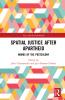
<p>This book considers the question of spatial justice after apartheid from several disciplinary perspectives – jurisprudence law literature architecture photography and psychoanalysis are just some of the disciplines engaged here. However the main theoretical device on which the authors comment is the legacy of what in Carl Schmitt’s terms is <i>nomos </i>as the spatialised normativity of sociality. Each author considers within the practical and theoretical constraints of their topic the question of what <i>nomos </i>in its modern configuration may or may not contribute to a thinking of spatial justice after apartheid.</p><p>On the whole the collection forces a confrontation between law’s spatiality in a “postcolonial” era on the one hand and the traumatic legacy of what Paul Gilroy has called the “colonial <i>nomos</i>” on the other hand. In the course of this confrontation critical questions of continuation extension disruption and rewriting are raised and confronted in novel and innovative ways that both challenge Schmitt’s account of <i>nomos </i>and affirm the centrality of the constitutive relation between law and space. The book promises to resituate the trajectory of <i>nomos</i> while considering critical instances through which the spatial legacy of apartheid might at last be overcome.</p><p>This interdisciplinary book will appeal to scholars of critical legal theory political philosophy aesthetics and architecture.</p>
Piracy-free
Assured Quality
Secure Transactions
*COD & Shipping Charges may apply on certain items.
Review final details at checkout.
₹3777
₹4739
20% OFF
Paperback
Out Of Stock
All inclusive*
Details
ISBN 13
9781032288109
Publication Date
-27-05-2024
Pages
-276
Weight
-472 grams
Dimensions
-155.96x233.93x14.88 mm
