





This Book is Out of Stock!
by




Paperback
₹2606
(All inclusive*)
Delivery Options
*COD & Shipping Charges may apply on certain items.
Review final details at checkout.
Looking to place a bulk order? SUBMIT DETAILS

Piracy-free

Assured Quality

Secure Transactions
About The Book
Description
Author
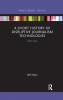
<p><em>A Short History of Disruptive Journalism Technologies</em> provides a swift analysis of the computerization of the newsroom from the mid-1960s through to the early 1990s. It focuses on how word processing and a number of related affordances including mobile-reporting tools impacted the daily work routines of American news workers. </p><p>The narrative opens with the development of mainframes and their attendant use as databases in large daily newspapers It moves on to the minicomputer era and explores initial news-worker experiences with computers for editing and publication. Following this the book examines the microprocessor era and the rise of smart terminals microcomputers and off-the-shelf hardware/software along with the increasing use of computers in smaller news organizations. Mari then turns to the use of pre-internet networks wire-services and bulletin boards deployed for user interaction. He looks at the integration of decentralized computer networks in newsrooms with a mix of content-management systems and PCs and the increasing use of pagers and cellphones for news-gathering including the shift from portable to mobile conceptualizations for these technologies.</p><p>A Short History of Disruptive Journalism Technologies is an illuminating survey for students and instructors of journalism studies. It represents an important acknowledgement of the impact of<i> pre-internet </i>technological disruptions which led to the even more disruptive internet- and related computing technologies in the latter 1990s and through the present. </p>
Piracy-free
Assured Quality
Secure Transactions
*COD & Shipping Charges may apply on certain items.
Review final details at checkout.
₹2606
Out Of Stock
All inclusive*
Details
ISBN 13
9781032338590
Publication Date
-13-06-2022
Pages
-116
Weight
-145 grams
Dimensions
-137.92x215.9x6.56 mm
