




This Book is Out of Stock!
by



Paperback
₹4026
₹4976
19.09% OFF
(All inclusive*)
Delivery Options
*COD & Shipping Charges may apply on certain items.
Review final details at checkout.
Looking to place a bulk order? SUBMIT DETAILS

Piracy-free

Assured Quality

Secure Transactions
About The Book
Description
Author
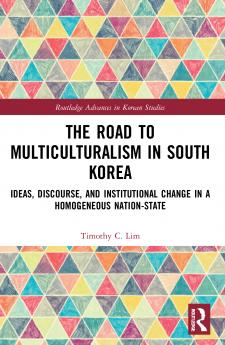
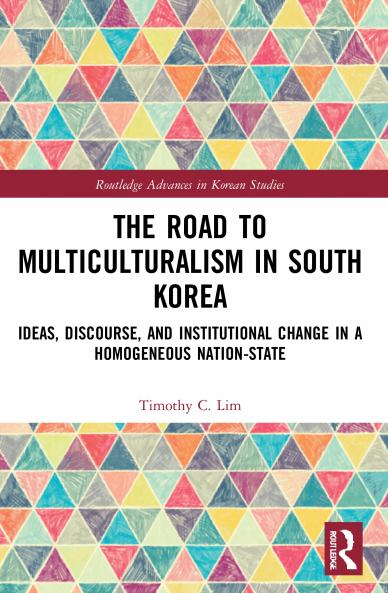
<p>This book aims to capture the complicated development of Korea from monoethnic to multicultural society challenging the narrative of “ethnonational continuity” in Korea through a discursive institutional approach.</p><p>At a time when immigration is changing the face of South Korea and an increasingly diverse society becomes empirical fact this doesn’t necessarily mean that multiculturalism has been embraced as a normative policy-based response to that fact. The approach here diverges from existing academic analyses which tend to conclude that core institutions defining Korea’s immigration and nationality regimes — and which crucially also reflect a basic and hitherto unyielding commitment to racial and ethnic homogeneity — will remain largely unaffected by increasing diversity. Here this title underscores the critical importance of “discursive agency” as a necessary corrective to still dominant power and interestbased arguments. In addition “discursive agents” are found to play a central role in communicating promoting and helping to instill the ideas that create a basis for change on the road to remaking Korean society.</p><p><em>The Road to Multiculturalism in South Korea </em>will be of interest to students and scholars of Asian studies immigration and migration studies race and ethnic studies as well as comparative politics broadly.</p>
Piracy-free
Assured Quality
Secure Transactions
*COD & Shipping Charges may apply on certain items.
Review final details at checkout.
₹4026
₹4976
19% OFF
Paperback
Out Of Stock
All inclusive*
Details
ISBN 13
9780367646653
Publication Date
-01-08-2022
Pages
-224
Weight
-325 grams
Dimensions
-155.96x233.93x12.11 mm
