





This Book is Out of Stock!
by




Hardback
₹13179
₹16840
21.74% OFF
(All inclusive*)
Delivery Options
*COD & Shipping Charges may apply on certain items.
Review final details at checkout.
Looking to place a bulk order? SUBMIT DETAILS

Piracy-free

Assured Quality

Secure Transactions
About The Book
Description
Author
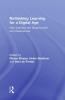
<p><em>Rethinking Learning for a Digital Age</em> addresses the complex and diverse experiences of learners in a world embedded with digital technologies. The text combines first-hand accounts from learners with extensive research and analysis, including a developmental model for effective e-learning, and a wide range of strategies that digitally-connected learners are using to fit learning into their lives. A companion to <em>Rethinking Pedagogy for a Digital Age</em> (2007), this book focuses on how learners’ experiences of learning are changing and raises important challenges to the educational status quo.</p><p><em>Rethinking Learning for a Digital Age</em>:</p><ul> <p> </p> <li>moves beyond stereotypes of the "net generation" to explore the diversity of e-learning experiences today</li> <li>analyses learners' experiences holistically, across the many technologies and learning opportunities they encounter</li> <li>reveals digital-age learners as creative actors and networkers in their own right, who make strategic choices about their use of digital applications and learning approaches.</li> </ul><p>Today’s learners are active participants in their learning experiences and are shaping their own educational environments. Professors, learning practitioners, researchers, and policy-makers will find <em>Rethinking Learning for a Digital Age</em> invaluable for understanding the learning experience, and shaping their own responses.</p> <p><em>Foreword</em>, Betty Collis and Jef Moonen</p><p><em>An introduction to rethinking learning</em>, Rhona Sharpe, Helen Beetham, Sara de Freitas and Gráinne Conole</p><p><strong>Part I. New contexts for learning</strong></p><p>1. <em>The influence of pervasive and integrative tools on learners’ experiences and expectations of study</em>, Sara de Freitas and Gráinne Conole</p><p>2. <em>Social networking: key messages from the research</em>, Keri Facer and Neil Selwyn </p><p>3. <em>Managing study and life with technology</em>, Linda Creanor and Kathryn Trinder</p><p>4. <em>Constructs that impact the Net Generation’s satisfaction with online learning</em>, Charles Dziuban, Patsy Moskal, George Bradford, Jay Brophy-Ellison and Amanda Groff</p><p>5. <em>Provisionality, play and pluralism in liminal spaces</em>, Maggi Savin-Baden and Cathy Tombs</p><p><strong>Part II. Frameworks for understanding learners’ experiences</strong></p><p>6. <em>Understanding students’ uses of technology for learning: towards creative appropriation</em>, Rhona Sharpe and Helen Beetham</p><p>7. <em>Expanding conceptions of study, context and educational design</em>, Peter Goodyear and Robert Ellis</p><p>8. <em>How learners change: critical moments, changing minds</em>, Judy Hardy and Amanda Jefferies</p><p>9. <em>Listening with a different ear: understanding disabled students’ relationship with technologies</em>, Jane Seale and Nick Bishop</p><p>10. <em>Strengthening and weakening boundaries: students negotiating technology mediated learning</em>, Laura Czerniewicz and Cheryl Brown</p><p><strong>Part III. New learning practices</strong></p><p>11. <em>The changing practices of knowledge and learning</em>, Helen Beetham and Martin Oliver</p><p>12. <em>Analysing digital literacy in action – a case study of a problem orientated learning process</em>, Thomas Ryberg and Lone Dirckinck-Holmfeld</p><p>13. <em>Collaborative knowledge building</em>, Greg Benfield and Maarten de Laat</p><p>14. <em>‘But it’s not just developing like a learner, it’s developing as a person’: Reflections on e-portfolio based learning</em>, Julie Hughes</p><p>15. <em>Skills and strategies for e-learning in a participatory culture</em>, Simon Walker, Jill Jameson and Malcolm Ryan</p>
Piracy-free
Assured Quality
Secure Transactions
*COD & Shipping Charges may apply on certain items.
Review final details at checkout.
₹13179
₹16840
21% OFF
Hardback
Out Of Stock
All inclusive*
Details
ISBN 13
9780415875424
Publication Date
-16-06-2010
Pages
-254
Weight
-437 grams
Dimensions
-152x229x15.05 mm
