


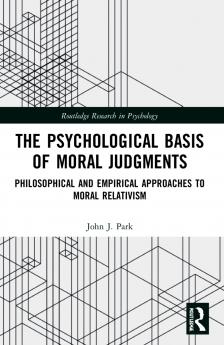


This Book is Out of Stock!
by
English



Paperback
₹3810
₹4739
19.6% OFF
(All inclusive*)
Delivery Options
*COD & Shipping Charges may apply on certain items.
Review final details at checkout.
Looking to place a bulk order? SUBMIT DETAILS

Piracy-free

Assured Quality

Secure Transactions
About The Book
Description
Author
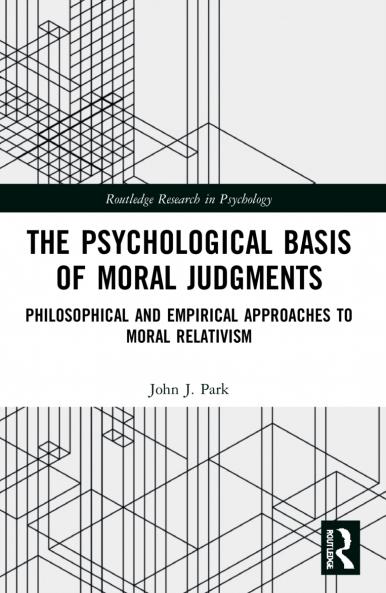
<p>This volume examines the psychological basis of moral judgments and asks what theories of concepts apply to moral concepts. By combining philosophical reasoning and empirical insights from the fields of moral psychology cognitive science evolutionary psychology and neuroscience it considers what mental states not only influence but also constitute our moral concepts and judgments. On this basis Park proposes a novel pluralistic theory of moral concepts which includes three different cognitive structures and emotions. Thus our moral judgments are shown to be a hybrid that express both cognitive and conative states.</p><p>In part through analysis of new empirical data on moral semantic intuitions gathered via cross-cultural experimental research Park reveals that the referents of individuals’ moral judgments and concepts vary across time contexts and groups. On this basis he contends for moral relativism where moral judgments cannot be universally true across time and location but only relative to groups.</p><p>This powerfully argued text will be of interest to researchers academics and educators with an interest in cognitive science moral theory philosophy of psychology and moral psychology more broadly. Those interested in ethics applied social psychology and moral development will also benefit from the volume.</p>
Piracy-free
Assured Quality
Secure Transactions
*COD & Shipping Charges may apply on certain items.
Review final details at checkout.
₹3810
₹4739
19% OFF
Paperback
Out Of Stock
All inclusive*
Details
ISBN 13
9780367740764
Publication Date
-09-01-2023
Pages
-370
Weight
-501 grams
Dimensions
-152x229x19.61 mm
