





This Book is Out of Stock!
by
English




Paperback
₹3865
₹4739
18.44% OFF
(All inclusive*)
Delivery Options
*COD & Shipping Charges may apply on certain items.
Review final details at checkout.
Looking to place a bulk order? SUBMIT DETAILS

Piracy-free

Assured Quality

Secure Transactions
About The Book
Description
Author
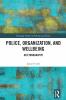
<p>Based on the study of a police organization in England this book explores the role of social relations in the ways that people construct mobilize consume and reconstruct meaning about wellbeing. Wellbeing is a powerful institutionalized concept in police organizations across England and Wales. With the emergence of numerous policies strategies and practices that both explicitly and implicitly address wellbeing in the workplace the concept has come to feature prominently. Wellbeing is addressed as an issue that needs to be understood intersubjectively by attending to the underlying social issues that shape how it is promoted or denied.</p><p>After a theoretical exploration of police culture and wellbeing the book traverses ethnographic data and captures insights from individuals across the organization’s hierarchy. It explores what individuals perceive wellbeing to mean and how they make sense of the concept. The book reveals discernible ideological-laden tensions across the hierarchy in terms of wellbeing constructions. By exploring these tensions there is a potential to understand the constructions of wellbeing and the resultant implications for practice.</p><p>This book will be of interest to academics researchers and students in policing criminology criminal justice leadership/management organizational behaviour and wellbeing. Given its empirical focus and applicability to practitioners it will also be of interest to a range of non-academics including police officers and leaders public servants private organizations policymakers and human resources professionals.</p>
Piracy-free
Assured Quality
Secure Transactions
*COD & Shipping Charges may apply on certain items.
Review final details at checkout.
₹3865
₹4739
18% OFF
Paperback
Out Of Stock
All inclusive*
Details
ISBN 13
9780367721367
Publication Date
-27-05-2024
Pages
-144
Weight
-215 grams
Dimensions
-156x234x8 mm
