




This Book is Out of Stock!
by



Paperback
₹651
₹999
34.83% OFF
(All inclusive*)
Delivery Options
*COD & Shipping Charges may apply on certain items.
Review final details at checkout.
Looking to place a bulk order? SUBMIT DETAILS

Piracy-free

Assured Quality

Secure Transactions
About The Book
Description
Author
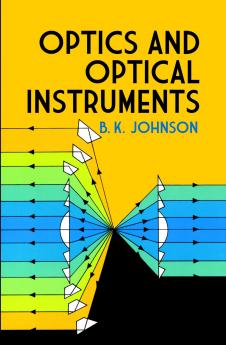
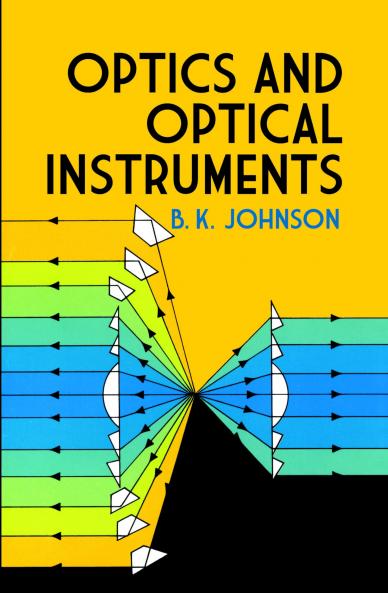
This book illustrates basic practical applications of optical principle. Working models of telescopes microscopes photographic lenses and optical projection systems are diagrammed and explained in full as are the basic experiments for determining accuracy power angular field of view amount of aberration and all other necessary facts about the instrument. Throughout the book only elementary mathematics is used for the benefit of the student and the beginner in the field of optics.The author an assistant professor at the Imperial College of Science and Technology in London shows how to set up working models of each of the four types of instruments named above so that the reader can see for himself the effects of changing the focal length using different types of lenses rotating the lens and other experiments. He also includes a number of experiments to illustrate theoretical principles such as the reflection and refraction of light and focal length measurements of concave and convex lenses.A chapter on the human eye follows and the author explains how to set up a simple working model of the eye in order to illustrate myopia astigmatism hypermetropia and the visual acuity of the eye. Professor Johnson concludes with an important chapter on the working and testing of optical glass in which he describes the roughing of lenses the principles of the grinding and polishing processes abrasives edging angle measurement and other important steps in the production of optical glass. An appendix is included on the cleaning of glass surfaces silvering photographic items developers collodion films and waxes and cements used for various purposes in optical work.This is a valuable work for the student and the amateur hobbyist as well as for many who use optical instruments in science and industry. It is written clearly and economically with the needs of the practical worker in the field of optics held constantly in mind.
Piracy-free
Assured Quality
Secure Transactions
*COD & Shipping Charges may apply on certain items.
Review final details at checkout.
₹651
₹999
34% OFF
Paperback
Out Of Stock
All inclusive*
Details
ISBN 13
9780486606422
Publication Date
-28-03-2003
Pages
-256
Weight
-216 grams
Dimensions
-139.7x215.9x15.58 mm
