


This Book is Out of Stock!
by
English




Paperback
₹4067
₹5095
20.18% OFF
(All inclusive*)
Delivery Options
*COD & Shipping Charges may apply on certain items.
Review final details at checkout.
Looking to place a bulk order? SUBMIT DETAILS

Piracy-free

Assured Quality

Secure Transactions
About The Book
Description
Author
Shoutouts
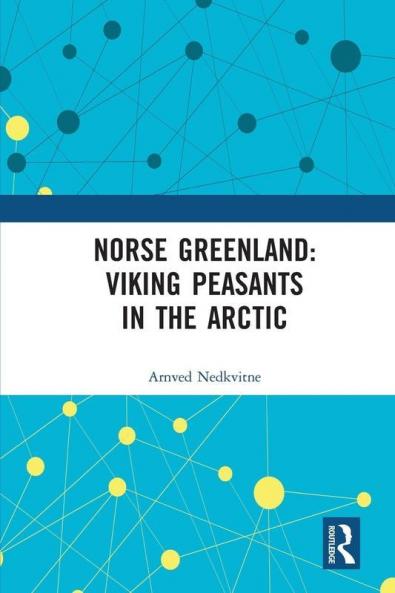
<p>How could a community of 2000–3000 Viking peasants survive in Arctic Greenland for 430 years (ca. 985–1415) and why did they finally disappear? European agriculture in an Arctic environment encountered serious ecological challenges. The Norse peasants faced these challenges by adapting agricultural practices they had learned from the Atlantic and North Sea coast of Norway.</p><p></p><p>Norse Greenland was the stepping stone for the Europeans who first discovered America and settled briefly in Newfoundland ca. AD 1000. The community had a global significance which surpassed its modest size.</p><p></p><p>In the last decades scholars have been nearly unanimous in emphasising that long-term climatic and environmental changes created a situation where Norse agriculture was no longer sustainable and the community was ruined. A secondary hypothesis has focused on ethnic confrontations between Norse peasants and Inuit hunters. In the last decades ethnic violence has been on the rise in Eastern Europe the Middle East and parts of Africa. In some cases it has degenerated into ethnic cleansing. This has strengthened the interest in ethnic violence in past societies. Challenging traditional hypotheses is a source of progress in all science. The present book does this on the basis of relevant written and archaeological material respecting the methodology of both sciences.</p>
Piracy-free
Assured Quality
Secure Transactions
*COD & Shipping Charges may apply on certain items.
Review final details at checkout.
₹4067
₹5095
20% OFF
Paperback
Out Of Stock
All inclusive*
Details
ISBN 13
9780367585808
Publication Date
-30-06-2020
Pages
-446
Weight
-629 grams
Dimensions
-156x234x23.51 mm
