





This Book is Out of Stock!
by
English



Paperback
₹3346
₹4147
19.32% OFF
(All inclusive*)
Delivery Options
*COD & Shipping Charges may apply on certain items.
Review final details at checkout.
Looking to place a bulk order? SUBMIT DETAILS

Piracy-free

Assured Quality

Secure Transactions
About The Book
Description
Author
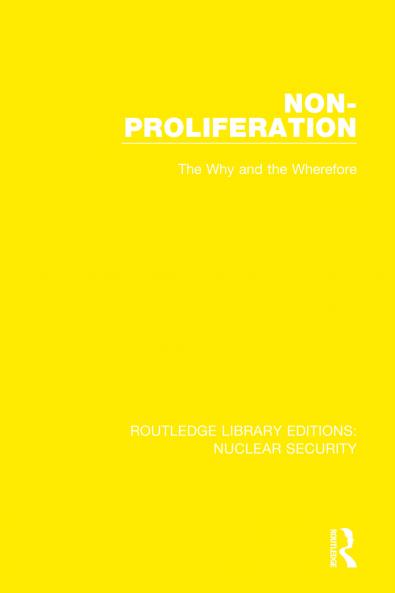
<p>Is the appearance of new nuclear weapon states inevitable? Who are the sponsors and apologists of nuclear weapons and why are others in favour of renouncing them? What are the implications for international security of the increasingly wide use of nuclear energy? How can nuclear threats be defused?</p><p>Originally published in 1985 SIPRI's study suggests some answers to these questions. The book examines the situation in a number of countries of key importance for non-proliferation: the two nuclear-weapon states which have declined to join the 1968 Non-Proliferation Treaty (China and France); a group of nuclear ‘threshold’ states also remaining outside the Treaty (Argentina Brazil India Israel Pakistan South Africa and Spain); and a group of states both developed and developing which for various reasons have joined the Treaty (Canada Egypt South Korea Sweden Switzerland and Taiwan).</p><p>The focus of the book is on motivations for and against nuclear proliferation. An analysis of these motivations leads the editor to make detailed recommendations aimed at halting the spread of nuclear weapons.</p><p>Appendices include a list of nuclear facilities in the countries studied specifying the degree of their coverage by international controls and other relevant documentation.</p>
Piracy-free
Assured Quality
Secure Transactions
*COD & Shipping Charges may apply on certain items.
Review final details at checkout.
₹3346
₹4147
19% OFF
Paperback
Out Of Stock
All inclusive*
Details
ISBN 13
9780367516123
Publication Date
-04-09-2022
Pages
-360
Weight
-512 grams
Dimensions
-156x234x19.09 mm
