





This Book is Out of Stock!
by




Paperback
₹3777
₹4739
20.3% OFF
(All inclusive*)
Delivery Options
*COD & Shipping Charges may apply on certain items.
Review final details at checkout.
Looking to place a bulk order? SUBMIT DETAILS

Piracy-free

Assured Quality

Secure Transactions
About The Book
Description
Author
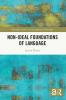
<p>This book argues that the major traditions in the philosophy of language have mistakenly focused on highly idealized linguistic contexts. Instead it presents a non-ideal foundational theory of language that contends that the essential function of language is to direct attention for the purpose of achieving diverse social and political goals.</p><p>Philosophers of language have focused primarily on highly idealized linguistic contexts in which cooperative agents are working toward the shared goal of gaining information about the world. This approach abstracts away from important issues like power ideology social position and diversity of goals which are crucial to explaining linguistic phenomena both at the semantic and pragmatic levels. This book begins by examining the work of some of the pioneers of this tradition—primarily David Lewis Paul Grice and Robert Stalnaker. The author shows that various problems have their source in idealizations made at the foundational level of linguistic theory and proposes to rebuild from the ground-up. She presents a non-ideal foundational theory of language which retains the major insights of traditional frameworks while rejecting the social idealizations that guide them. Then she explores the social and political applications of her account to issues such as dog whistling propaganda racist speech silencing and manipulation.</p><p><i>Non-Ideal Foundations of Language </i>will appeal to researchers and advanced students in philosophy of language who are interested in the social and political applications of language as well as traditional metasemantic theory.</p>
Piracy-free
Assured Quality
Secure Transactions
*COD & Shipping Charges may apply on certain items.
Review final details at checkout.
₹3777
₹4739
20% OFF
Paperback
Out Of Stock
All inclusive*
Details
ISBN 13
9781032036946
Publication Date
-13-12-2022
Pages
-196
Weight
-273 grams
Dimensions
-152x229x10.67 mm
