




This Book is Out of Stock!
by
English




Paperback
₹4249
₹5332
20.31% OFF
(All inclusive*)
Delivery Options
*COD & Shipping Charges may apply on certain items.
Review final details at checkout.
Looking to place a bulk order? SUBMIT DETAILS

Piracy-free

Assured Quality

Secure Transactions
About The Book
Description
Author
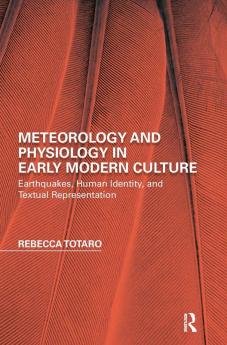
<p><em>Meteorology and Physiology in Early Modern Culture: Earthquakes Human Identity and Textual Representation</em> provides the first sustained examination of the foundational set of early modern beliefs linking meteorology and physiology. This was a relationship so intimate and to us poetic that we have spent centuries assuming early moderns were using figurative language when they represented the matter and motions of their bodies in meteorological terms and weather events in physiological ones. Early moderns believed they inhabited a geocentric universe in which the matter and motions constituting all sublunary things were the same and that therefore all things were compositionally and interactively related. What physically generated anger erotic desire and plague also generated thunder the earthquake and the comet. As a result the interpretation of meteorological events such as the 1580 earthquake in the Dover Strait was consequential. With its radical and seemingly spontaneous shaking an earthquake could expose inconvenient truths about the cause of matter and motion and about what if anything distinguishes humans from every other thing and from events. <i>Meteorology and Physiology in Early Modern Culture </i>reveals a need for reexamination of all representations of meteorology and physiology in the period. This reexamination begins here with a focus on the Titanic metamorphoses captured by Edmund Spenser William Shakespeare John Donne and the many writers responding to the 1580 earthquake. </p><p></p>
Piracy-free
Assured Quality
Secure Transactions
*COD & Shipping Charges may apply on certain items.
Review final details at checkout.
₹4249
₹5332
20% OFF
Paperback
Out Of Stock
All inclusive*
Details
ISBN 13
9780367667368
Publication Date
-30-09-2020
Pages
-172
Weight
-453 grams
Dimensions
-229x152x9.95 mm
