




This Book is Out of Stock!
by
English



Paperback
₹4014
₹4976
19.33% OFF
(All inclusive*)
Delivery Options
*COD & Shipping Charges may apply on certain items.
Review final details at checkout.
Looking to place a bulk order? SUBMIT DETAILS

Piracy-free

Assured Quality

Secure Transactions
About The Book
Description
Author
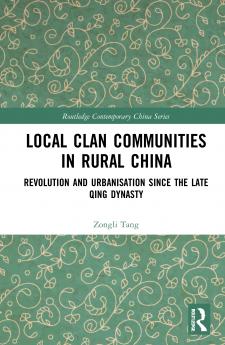
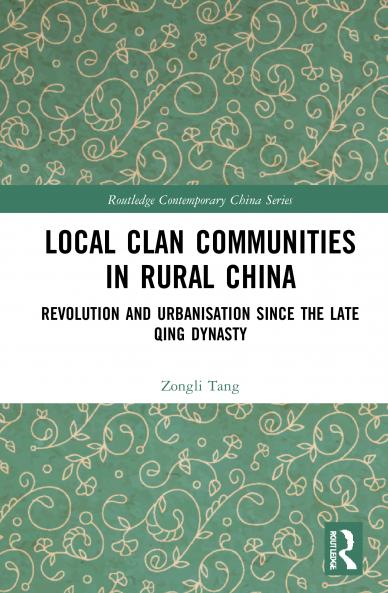
<p>Using data collected in fieldwork and surveys this book examines China’s clan system and local clan communities in rural Anhui covering events in two periods: the imperial pattern as seen in the first half of the twentieth century and changes since 1949. Revealed by this research during the late Qing and the Republic Era a local clan in the investigated areas was run as a highly autonomous community with a strong religious focus which challenges the corporate model raised by Maurice Freedman. Through examining single-surname villages <i>citang </i>constructions and updating of genealogies local clans in Huadong Huizhou and the lower Yangtze River plains in particular developed earlier than those in the Pearl River Delta Region. Taking a cross-disciplinary viewpoint this book analyses changes in local clan communities and clan culture as brought by the Chinese Revolution Mao’s political campaigns and Deng’s reforms. Starting with the late 1990s a large migration from villages to cities has rapidly altered rural China. This geographic mobility would undermine the common residence that serves as part of a clan’s foundation. Under such situation what transformations have taken place or will affect China’s clan system? Will the system continue to revitalise or die out? <i>Local Clan Communities in Rural China</i> reports these events/transformations and attempts to answer these questions. Placing a special emphasis on issues that have been overlooked by prior studies this book brings to light many new facts and interpretations and provides a valuable reference to scholars in fields of sociology anthropology history economics cultural studies urban studies and population studies.</p>
Piracy-free
Assured Quality
Secure Transactions
*COD & Shipping Charges may apply on certain items.
Review final details at checkout.
₹4014
₹4976
19% OFF
Paperback
Out Of Stock
All inclusive*
Details
ISBN 13
9780367771072
Publication Date
-31-05-2023
Pages
-262
Weight
-377 grams
Dimensions
-155.96x233.93x14.06 mm
