




This Book is Out of Stock!
by
English



Paperback
₹3846
₹4739
18.84% OFF
(All inclusive*)
Delivery Options
*COD & Shipping Charges may apply on certain items.
Review final details at checkout.
Looking to place a bulk order? SUBMIT DETAILS

Piracy-free

Assured Quality

Secure Transactions
About The Book
Description
Author
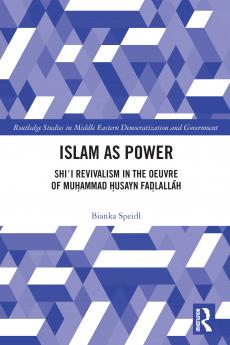
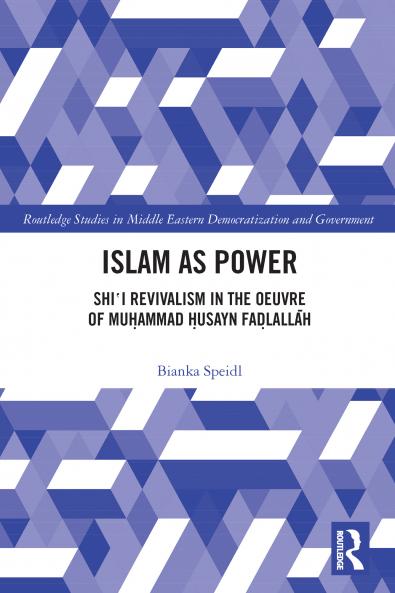
<p>Providing an in-depth and extensive analysis of the concept of power as articulated</p><p>by Muhammad Husayn Fadlallah (1935–2010) this case study analyses the</p><p>systemic conceptualisation of power and his argumentation of sacralising</p><p>Islamised power. The volume also offers a quick overview of how the concept was</p><p>understood and articulated by other Shi‛ite jurists such as Ayatollah Khomeini.</p><p>Examining Fadlallah’s oeuvre in particular his seminal book <i>Islam and the</i></p><p>Logic of Power [ <i>al-Islam wa-mantiq al-quwwa </i>] this book focuses on the narrative</p><p>itself which played a central role in the radical transformation that occurred in the</p><p>Shi‛te concept of empowerment and its recognition as a necessity. The analysis</p><p>of Fadlallah’s conceptualisation and argumentation illustrates the mechanism</p><p>of sacralising righteous power as well as the means of gaining it. Fadlallah</p><p>reinterpreted Shi‛sm as a project of empowerment to initiate and sustain an</p><p>“impulse of power” amongst the Lebanese Shi‛tes in the most critical moment of</p><p>modern Lebanese history.</p><p>Dealing with the concept of power in Shi‛te political thought from a theoretical</p><p>perspective the study has an innovative approach that offers an insight into</p><p>how the transformative narrative is constructed and what makes it convincing.</p><p>Shedding light on the content and logical structure of Fadlallah’s argumentation</p><p>this volume will be of interest to scholars and students researching contemporary</p><p>politics Islam and the Middle East.</p>
Piracy-free
Assured Quality
Secure Transactions
*COD & Shipping Charges may apply on certain items.
Review final details at checkout.
₹3846
₹4739
18% OFF
Paperback
Out Of Stock
All inclusive*
Details
ISBN 13
9780367558574
Publication Date
-09-01-2023
Pages
-202
Weight
-295 grams
Dimensions
-156x234x10.98 mm
