





This Book is Out of Stock!
by




Paperback
₹4120
₹5095
19.14% OFF
(All inclusive*)
Delivery Options
*COD & Shipping Charges may apply on certain items.
Review final details at checkout.
Looking to place a bulk order? SUBMIT DETAILS

Piracy-free

Assured Quality

Secure Transactions
About The Book
Description
Author
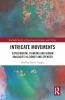
<p>Renaissance humanism takes as one of its subjects for inquiry the category of the human itself. As <i>Intricate Movements: Experimental Thinking and Human Analogies in Sidney and Spenser</i> shows late sixteenth-century English poets found some remarkably radical ways to interrogate and redefine the status of humans. </p><p>The recent vogue for posthumanist theory encourages a view of non-human objects and animals in Renaissance literature as pathways to essentially anti-humanist thought. On the contrary this book argues that Sidney Spenser and their contemporaries employ animals earth buildings and fictions as analogies employed toward a better understanding of what makes humans a special category both ontologically and ethically. Horses and riders are studied by Sidney as a way to understand readers and writers; the 1580 Dover Straits Earthquake provides Spenser and Gabriel Harvey an opportunity to explore human emotion; liturgical spaces are represented by Sidney and Spenser in order to reassess human community; and fictional persons are interrogated by Spenser as models for human interpersonal epistemology.</p><p></p><p>This volume seeks to return critical assessments of the period's engagement with the non-human back to human concerns. Focusing on several early modern analogies between human and non-human entities <i>Intricate Movements</i> argues Sidney's and Spenser's thinking about the human is both radically experimental and ultimately humane.</p>
Piracy-free
Assured Quality
Secure Transactions
*COD & Shipping Charges may apply on certain items.
Review final details at checkout.
₹4120
₹5095
19% OFF
Paperback
Out Of Stock
All inclusive*
Details
ISBN 13
9781032093611
Publication Date
-30-06-2021
Pages
-224
Weight
-310 grams
Dimensions
-152x229x12.11 mm
