





This Book is Out of Stock!
by
English




Paperback
₹3830
₹4739
19.18% OFF
(All inclusive*)
Delivery Options
*COD & Shipping Charges may apply on certain items.
Review final details at checkout.
Looking to place a bulk order? SUBMIT DETAILS

Piracy-free

Assured Quality

Secure Transactions
About The Book
Description
Author
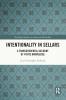
<p>This book argues that Sellars’ theory of intentionality can be understood as an advancement of a transcendental philosophical approach. It shows how Sellars develops his theory of intentionality through his engagement with the theoretical philosophy of Immanuel Kant.</p><p>The book delivers a provocative reinterpretation of one of the most problematic and controversial concepts of Sellars' philosophy: the picturing-relation. Sellars' theory of intentionality addresses the question of how to reconcile two aspects that seem opposed: the non-relational theory of intellectual and linguistic content and a causal-transcendental theory of representation inspired by the philosophy of the early Wittgenstein. The author explains how both parts cohere in a transcendental account of finite knowledge. He claims that this can only be achieved by reading Sellars as committed to a transcendental methodology inspired by Kant. In a final step he brings his interpretation to bear on the contemporary metaphilosophical debate on pragmatism and expressivism.</p><p><i>Intentionality in Sellars </i>will be of interest to scholars of Sellars and Kant as well as researchers working in philosophy of mind epistemology and the history of nineteenth- and twentieth-century philosophy.</p>
Piracy-free
Assured Quality
Secure Transactions
*COD & Shipping Charges may apply on certain items.
Review final details at checkout.
₹3830
₹4739
19% OFF
Paperback
Out Of Stock
All inclusive*
Details
ISBN 13
9781032117584
Publication Date
-27-05-2024
Pages
-252
Weight
-346 grams
Dimensions
-152x229x13.55 mm
