




This Book is Out of Stock!
by




Paperback
₹4614
₹5687
18.87% OFF
(All inclusive*)
Delivery Options
*COD & Shipping Charges may apply on certain items.
Review final details at checkout.
Looking to place a bulk order? SUBMIT DETAILS

Piracy-free

Assured Quality

Secure Transactions
About The Book
Description
Author
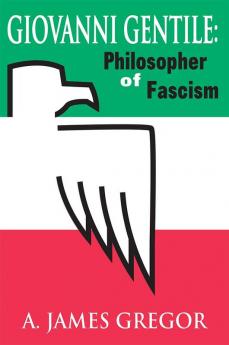
<p>The recent rise in Europe of extreme right-wing political parties along with outbreaks of violent nationalist fervor in the former communist bloc has occasioned much speculation on a possible resurgence of fascism. At the polemical level fascism has become a generic term applied to virtually any form of real or potential violence while among Marxist and left-wing scholars discredited interpretations of fascism as a product of late capitalism are revived. Empty of cognitive significance these formulas disregard the historical and philosophical roots of fascism as it arose in Italy and spread throughout Europe. In <em>Giovanni Gentile: Philosopher of Fascism</em> A. James Gregor returns to those roots by examining the thought of Italian Fascism's major theorist.</p><p>In Gregor's reading of Gentile fascism was-and remains-an anti-democratic reaction to what were seen to be the domination by advanced industrial democracies of less-developed or status-deprived communities and nations languishing on the margins of the Great Powers. Sketching in the political background of late nineteenth-century Italy industrially backward and only recently unified Gregor shows how Gentile supplied fascism its justificatory rationale as a developmental dictatorship. Gentile's Actualism (as his philosophy came to be identified) absorbed many intellectual currents of the early twentieth century including nationalism syndicalism and futurism and united them in a dynamic rebellion against new perceived hegemonic impostures of imperialism. The individual was called to an idealistic ethic of obedience work self-sacrifice and national community. As Gregor demonstrates it was a paradigm of what we can expect in the twenty-first century's response on the part of marginal nations to the globalization of the industrialized democracies. Gregor cites post-Maoist China nationalist Russia Africa and the Balkans at the development stage from which fascism could grow.</p><p>The first book-length analysis in English of Gentile's thought in over thirty years this volume is valuable not only as a work of historical scholarship but as a timely warning. While Marxism-Leninism has passed into history fascism may yet reemerge as an external threat to democratic nations.</p>
Piracy-free
Assured Quality
Secure Transactions
*COD & Shipping Charges may apply on certain items.
Review final details at checkout.
₹4614
₹5687
18% OFF
Paperback
Out Of Stock
All inclusive*
Details
ISBN 13
9780765805935
Publication Date
-30-01-2004
Pages
-140
Weight
-200 grams
Dimensions
-152x229x7.79 mm
