


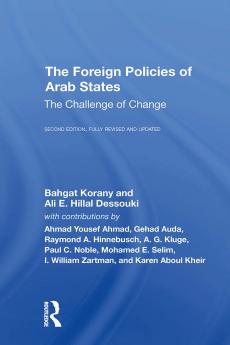


This Book is Out of Stock!
by



Paperback
₹4384
(All inclusive*)
Delivery Options
*COD & Shipping Charges may apply on certain items.
Review final details at checkout.
Looking to place a bulk order? SUBMIT DETAILS

Piracy-free

Assured Quality

Secure Transactions
About The Book
Description
Author
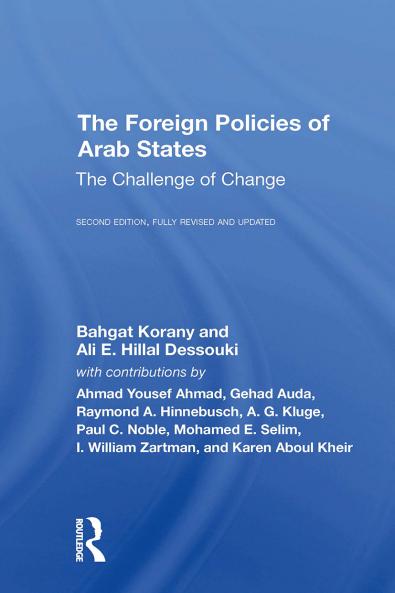
Middle East politics have been proverbial for their changeability. The 1970s ushered in petro-politics for instance but OPEC's international status declined markedly in the following decade. Similarly the Arab world's ostracism of Egypt in the 1970s following its separate peace with Israel was turned around in the 1980s; the late 1980s also brought PLO acceptance of the State of Israel. Interstate relations were not the only arena to experience significant alterations; state-society relations also underwent dramatic changes such as the acceleration of privatization in erstwhile socialist regimes. Then the 1990s opened with a political earthquake: the Gulf Crisis. The second edition of this highly acclaimed text offers a penetrating analysis of trends in Arab foreign policies since the book was originally published in 1984 including an early analysis of the effects of Iraq's invasion of Kuwait and the subsequent coalition victory over Iraq. In addition the authors have included new chapters on Jordan—at the heart of the Arab world—and on the Sudan—the region's link to sub-Saharan Africa. Their inclusion allows a fuller understanding of the foreign policies of states that occupy crucial geopolitical positions but wield little tangible power. Moreover in many of its chapters the book raises the crucial question of how the foreign policies of these countries can cope with the prevalence of political change.
Piracy-free
Assured Quality
Secure Transactions
*COD & Shipping Charges may apply on certain items.
Review final details at checkout.
₹4384
Out Of Stock
All inclusive*
Details
ISBN 13
9780367307677
Publication Date
-31-10-2024
Pages
-462
Weight
-621 grams
Dimensions
-152x229x24.34 mm
