




This Book is Out of Stock!
by



Hardback
₹12717
₹15998
20.51% OFF
(All inclusive*)
Delivery Options
*COD & Shipping Charges may apply on certain items.
Review final details at checkout.
Looking to place a bulk order? SUBMIT DETAILS

Piracy-free

Assured Quality

Secure Transactions
About The Book
Description
Author
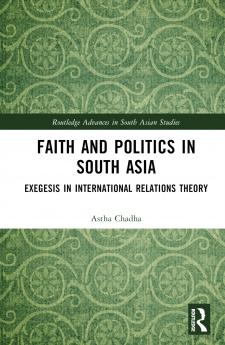
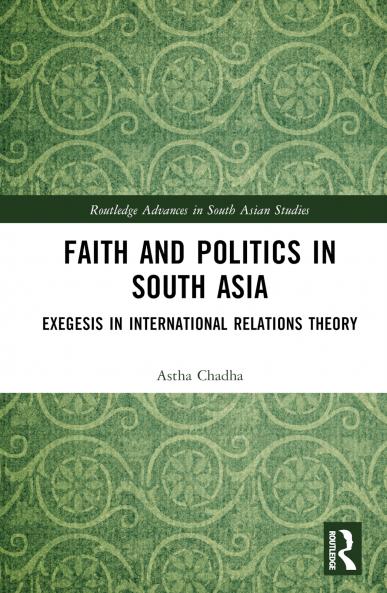
<p>This book explores the role of faith and politics in shaping the international relations of South Asia.</p><p>Adopting a neoclassical realist framework and a discourse-historical approach to analyse how religious actors construct their political identities and interests through the interpretation of sacred texts or exegesis the book makes several key contributions to the field of international relations. It introduces the concept of exegesis as a novel analytical tool to understand the role of religion in world politics. The book argues that exegesis is not only a theological exercise but also a political one as it shapes the worldviews values norms and interests of religious actors. The author applies exegesis to three case studies of South Asia: the partition of India and Pakistan; the rise of Hindu nationalism in India; and the emergence of Islamic radicalism in Pakistan and resurging signs of the same in Bangladesh. The research then revisits and challenges the debates in religion and international relations such as the secularization thesis the clash of civilizations and the rational actor model to show how religious actors are not monolithic homogeneous or irrational but rather diverse heterogeneous and strategic.</p><p>The book offers a nuanced and comprehensive understanding of the role of religion in world politics especially in the context of South Asia. Highlighting the diversity and complexity of the religious landscape in South Asia which is home to various faiths sects movements and ideologies this book will be of interest to academics studying global politics international relations Asian Studies and studies on religion and foreign policy.</p>
Piracy-free
Assured Quality
Secure Transactions
*COD & Shipping Charges may apply on certain items.
Review final details at checkout.
₹12717
₹15998
20% OFF
Hardback
Out Of Stock
All inclusive*
Details
ISBN 13
9781032860121
Publication Date
-18-11-2024
Pages
-182
Weight
-360 grams
Dimensions
-156x234x11.35 mm
