





This Book is Out of Stock!
by
English




Paperback
₹1698
₹2132
20.36% OFF
(All inclusive*)
Delivery Options
*COD & Shipping Charges may apply on certain items.
Review final details at checkout.
Looking to place a bulk order? SUBMIT DETAILS

Piracy-free

Assured Quality

Secure Transactions
About The Book
Description
Author
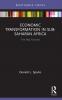
<p>Sub-Saharan Africa is vastly diverse and the 49 countries of the region range significantly in terms of population size and economic scale. The region also differs in topography climate history culture languages and political systems. Given this vast diversity it is accordingly difficult to draw general conclusions about the continent's economic performance as a whole. Additionally the lack of current statistics for several countries makes it difficult to make accurate assessments of economic conditions. Nevertheless some broad comparisons can be made: of the world's developing areas sub-Saharan Africa has the worst record in virtually all of the most important social and economic indicators: the region has the lowest gross national income per head the lowest life expectancy at birth the lowest youth literacy rate the highest rate of adult HIV infection and the highest number of children not living past five years of age. </p> <p></p> <p>This volume begins by examining recent economic developments and trends. It then looks at the major economic constraints the region has faced in recent years breaking down those constraints as either 'external' (e.g. terms of trade) over which the individual countries have but limited control or 'internal' (e.g. governance and economic policy) over which there is more control. The book concludes by arguing that despite the notable challenges cited above sub-Saharan Africa is poised for a transformation based on closer regional economic co-operation a growing middle class increased demand for locally produced goods and services and a young population.</p>
Piracy-free
Assured Quality
Secure Transactions
*COD & Shipping Charges may apply on certain items.
Review final details at checkout.
₹1698
₹2132
20% OFF
Paperback
Out Of Stock
All inclusive*
Details
ISBN 13
9781032034591
Publication Date
-28-10-2022
Pages
-72
Weight
-96 grams
Dimensions
-138x216x4.3 mm
