




This Book is Out of Stock!
by



Paperback
₹9618
₹12104
20.54% OFF
(All inclusive*)
Delivery Options
*COD & Shipping Charges may apply on certain items.
Review final details at checkout.
Looking to place a bulk order? SUBMIT DETAILS

Piracy-free

Assured Quality

Secure Transactions
About The Book
Description
Author
Shoutouts
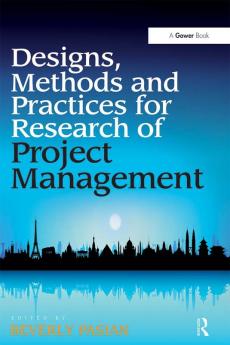
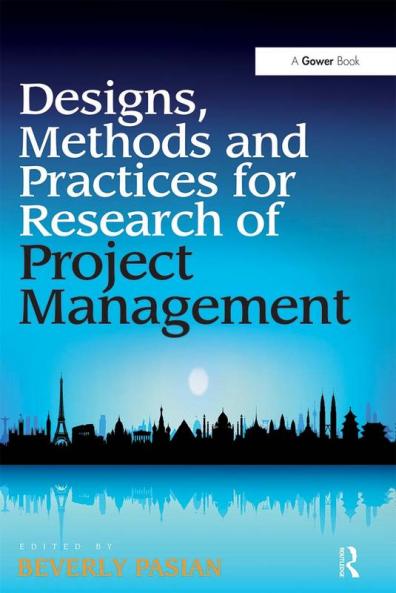
<p><i>Design Methods and Practices for Research of Project Management</i> is the most comprehensive guide on how to do research of and in project management. Project management as a discipline has experienced near-exponential growth in its application across the business and not-for-profit sectors. This second edition of the authoritative reference book offers a substantial update on the first edition with over 60% new content and so provides both practitioner and student researchers with a fully up-to-date and complete guide to research practice on project management.</p><p>In <i>Design Methods and Practices for Research of Project Management</i>, Beverly Pasian and Rodney Turner have brought together 27 original chapters from many of the leading international thinkers in project management research. The collection looks at each step in the research stages, including research strategy, management, methodology (quantitative and qualitative), techniques as well as how to share and publish research findings. The chapters offer an international perspective with examples from a wide range of project management applications; engineering, construction, mega-projects, high-risk environments and social transformation. Each chapter includes tips and exercises for the research student, as well as a complete set of further references.</p><p>The book is the go-to text for practitioners undertaking research in companies, and also doctoral and masters students and their supervisors who are involved in research projects in and for universities.</p> <p>Contents: Foreword; Introduction. Part I Foundational Issues: Project management research: addressing</p><p><i>Foreword </i></p><p><b>Section 1 Where you can start</b></p><p>Chapter 1 Ontology, Epistemology and Axiology: Understand your philosophy and approach</p><p><i>Ole Jonny Klakegg, and Ida Marie Tvedt</i></p><p>Chapter 2 Transferring from hunches to a compelling research topic</p><p><i>Derek Walker and Beverley Lloyd-Walker</i></p><p>Chapter 3 Critical engagement of previous research</p><p><i>Steven Nijhuis</i></p><p>Chapter 4 The construction of research aims and questions</p><p><i>Rodney Turner</i></p><p>Chapter 5 Project management research ethics</p><p><i>Helgi Þór Ingason and Haukur Ingi Jónasson and Thordur Vikingur Fridgeirsson</i></p><p><b>Section 2 The value of mixing things up</b></p><p>Chapter 6 Mixed methods strategising in project management</p><p><i>Karyne Ang</i></p><p>Chapter 7 Interview methodology for understanding projects, project management and temporary organising</p><p><i>Anette Hallin, Abo Akademi and Jenny Helin</i></p><p>Chapter 8 Case study research in project management</p><p><i>Rodney Turner</i></p><p>Chapter 9 Action research and project management</p><p><i>Shankar Sankaran and Bob Dick</i></p><p>Chapter 10 Experiment-based research in project and portfolio management</p><p><i>Catherine Killen</i></p><p>Chapter 11 Creating surveys to test theory in a project context</p><p><i>Blaize Reich and Andrew Gemino</i></p><p><b>Section 3 Specific ideas foro emergent environments</b></p><p>Chapter 12 A novel method for exploring collaboration in project meetings</p><p><i>Mona Abd Al-Salam, Catherine Killen and Perry Forsythe</i></p><p>Chapter 13 Narrative Inquiry in Project Management</p><p><i>Shankar Sankaran</i></p><p>Chapter 14 Autoethnography: bridging the project manager-researcher divide</p><p><i>Rafaella Broft and Simon Addyman</i></p><p>Chapter 15 An agile approach to the real experience of developing research methodology and methods</p><p><i>Hany Wells and Hedley Smyth</i></p><p>Chapter 16 Researching project impact in smart cities: methodological considerations</p><p><i>Beverly Pasian</i></p><p>Chapter 17 Integrating information modelling simulation for smart operation and management in hospitals</p><p><i>Yongkui Li, Yan Zhang, Xihu Pan and Yilong Han</i></p><p>Chapter 18 Project management research in the era of artificial intelligence</p><p><i>Seyed Ashkan Zarghami, Jantanee Dumrak and Roslyn Cameron</i></p><p>Chapter 19 Collaborating for studying projects: the example of welfare technology introduction in Sweden</p><p><i>Lucia Crevani, Michela Cozza and Silvia Bruzzone</i></p><p><b>Section 4 Analyzing and publishing</b></p><p>Chapter 20 Critical thinking as a core project management skill</p><p>Alexia Nalewaik</p><p>Chapter 21 Analysing qualitative data</p><p><i>Francesco Di Maddaloni</i></p><p>Chapter 22 Using text mining to validate qualitative findings</p><p><i>Tracey Richardson and Jim Marion</i></p><p>Chapter 23 The urge to publish: Transforming your dissertation into a publications</p><p><i>Darren Dalcher</i></p><p>Chapter 24 Writing research papers</p><p><i>Kam Jugdev and John Wyzalek</i></p><p><b>Section 5 Considering the future</b></p><p>Chapter 25 Mentoring: An essential aspect of researcher development</p><p><i>Deepak Bajaj and Pooja Bajaj</i></p><p>Chapter 26 The future of project management research is complex</p><p><i>Louis Klein</i></p>
Piracy-free
Assured Quality
Secure Transactions
*COD & Shipping Charges may apply on certain items.
Review final details at checkout.
₹9618
₹12104
20% OFF
Paperback
Out Of Stock
All inclusive*
Details
ISBN 13
9781409448808
Publication Date
-28-04-2015
Pages
-520
Weight
-731 grams
Dimensions
-156x234x27.32 mm
