





This Book is Out of Stock!
by



Hardback
₹13649
₹17183
20.57% OFF
(All inclusive*)
Delivery Options
*COD & Shipping Charges may apply on certain items.
Review final details at checkout.
Looking to place a bulk order? SUBMIT DETAILS

Piracy-free

Assured Quality

Secure Transactions
About The Book
Description
Author
Shoutouts
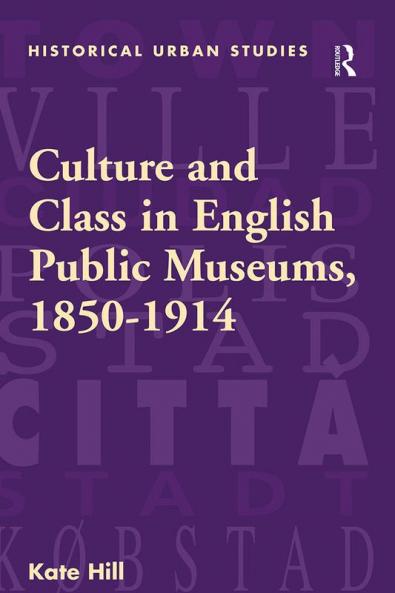
The nineteenth century witnessed a flowering of museums in towns and cities across Britain. As well as providing a focus for collections of artifacts and a place of educational recreation this work argues that municipal museums had a further social role. In a situation of rapid urban growth allied to social and cultural changes on a scale hitherto unknown it was inevitable that traditional class and social hierarchies would come under enormous pressure. As a result urban elites began to look to new methods of controlling and defining the urban environment. One such manifestation of this was the growth of the public museum. In earlier centuries museums were the preserve of learned and respectable minority yet by the end of the nineteenth century one of the principal rationales of museums was the education or 'improvement' of the working classes. In the control of museums too there was a corresponding shift away from private aristocratic leadership toward a middle-class civic directorship and a growing professional body of curators. This work is in part a study of the creation of professional authority and autonomy by museum curators. More importantly though it is about the stablization of middle-class identities by the end of the nineteenth century around new hierarchies of cultural capital. Public museums were an important factor in constructing the identity and authority of certain groups with access to and control over them. By examining urban identities through the cultural lens of the municipal museum we are able to reconsider and better understand the subtleties of nineteenth-century urban society.
Piracy-free
Assured Quality
Secure Transactions
*COD & Shipping Charges may apply on certain items.
Review final details at checkout.
₹13649
₹17183
20% OFF
Hardback
Out Of Stock
All inclusive*
Details
ISBN 13
9780754604327
Publication Date
-20-05-2005
Pages
-192
Weight
-373 grams
Dimensions
-156x234x11.86 mm
