





This Book is Out of Stock!
by




Paperback
₹3399
₹4265
20.3% OFF
(All inclusive*)
Delivery Options
*COD & Shipping Charges may apply on certain items.
Review final details at checkout.
Looking to place a bulk order? SUBMIT DETAILS

Piracy-free

Assured Quality

Secure Transactions
About The Book
Description
Author
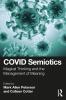
<p>This book examines how people around the world have articulated and shaped their experiences of COVID-19 through a sociolinguistic phenomenon known as magical thinking. Using case studies from throughout the world – China Egypt Europe Jordan Thailand East Jerusalem the UK and the United States – this volume looks at how people managed ambiguity and uncertainty risk and social isolation by viewing their experiences of the pandemic as other than or alongside those presented by voices and images representing scientifically derived knowledge. Each chapter in the volume introduces the reader to a core semiotic concept and shows how it can be used to analyze and unpack a specific signifying practice. In the conclusion the several concepts from the chapters – ideological positioning entextualization and recontextualization double-voicing discursive grafting imaging and contagion – are revisited and synthesized in order to demonstrate that semiotics is useful not only in ethnographic studies of various “others” and of various “crises” but also in explaining the quotidian experiences of everyday life. Ultimately this book reveals that COVID-related magical thinking practices are often as “contagious” as the virus they reimagine spreading through social media and resulting in such social phenomena as viral videos promoting and rejecting public health practices the first-lockdown stockpiling of toilet paper and hand sanitizer resistance to public health recommendations anti-vax rhetoric and competing interpretations of emerging public health data. This book not only represents cutting-edge research in the field but it also provides students of anthropology linguistics media and communication with the vocabulary and conceptual framework to understand the human experience of the COVID-19 pandemic.</p>
Piracy-free
Assured Quality
Secure Transactions
*COD & Shipping Charges may apply on certain items.
Review final details at checkout.
₹3399
₹4265
20% OFF
Paperback
Out Of Stock
All inclusive*
Details
ISBN 13
9781032462424
Publication Date
-22-11-2024
Pages
-188
Weight
-263 grams
Dimensions
-151.89x229.11x10.26 mm
