




This Book is Out of Stock!
by



Paperback
₹3185
₹3910
18.54% OFF
(All inclusive*)
Delivery Options
*COD & Shipping Charges may apply on certain items.
Review final details at checkout.
Looking to place a bulk order? SUBMIT DETAILS

Piracy-free

Assured Quality

Secure Transactions
About The Book
Description
Author
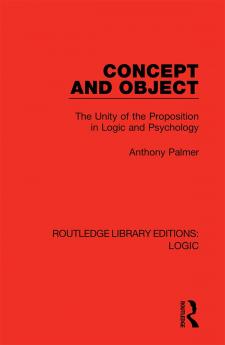
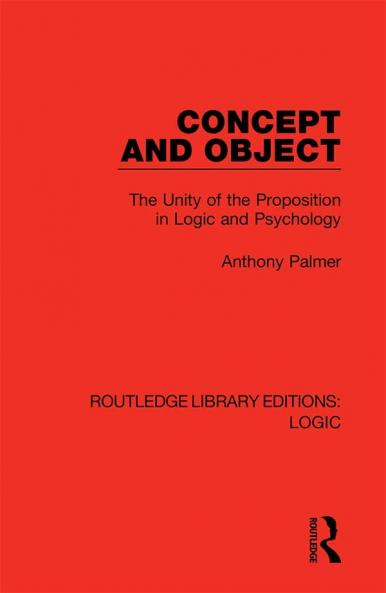
<p>Originally published in 1988. This text gives a lucid account of the most distinctive and influential responses by twentieth century philosophers to the problem of the unity of the proposition. The problem first became central to twentieth-century philosophy as a result of the depsychoiogising of logic brought about by Bradley and Frege who responding to the ’Psychologism’ of Mill and Hume drew a sharp distinction between the province of psychology and the province of logic.</p><p>This author argues that while Russell Ryle and Davidson each in different ways attempted a theoretical solution Frege and Wittgenstein (both in the Tractatus and the Investigations) rightly maintained that no theoretical solution is possible. It is this which explains the importance Wittgenstein attached in his later work to the idea of agreement in judgments. The two final chapters illustrate the way in which a response to the problem affects the way in which we think about the nature of the mind. They contain a discussion of Strawson’s concept of a person and provide a striking critique of the philosophical claims made by devotees of artificial intelligence in particular those made by Daniel Dennett.</p>
Piracy-free
Assured Quality
Secure Transactions
*COD & Shipping Charges may apply on certain items.
Review final details at checkout.
₹3185
₹3910
18% OFF
Paperback
Out Of Stock
All inclusive*
Details
ISBN 13
9780367426255
Publication Date
-01-02-2021
Pages
-162
Weight
-169 grams
Dimensions
-129.03x198.12x8.92 mm
