


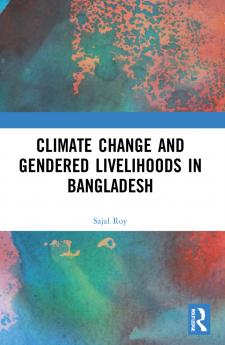


This Book is Out of Stock!
by



Paperback
₹4020
₹4976
19.21% OFF
(All inclusive*)
Delivery Options
*COD & Shipping Charges may apply on certain items.
Review final details at checkout.
Looking to place a bulk order? SUBMIT DETAILS

Piracy-free

Assured Quality

Secure Transactions
About The Book
Description
Author
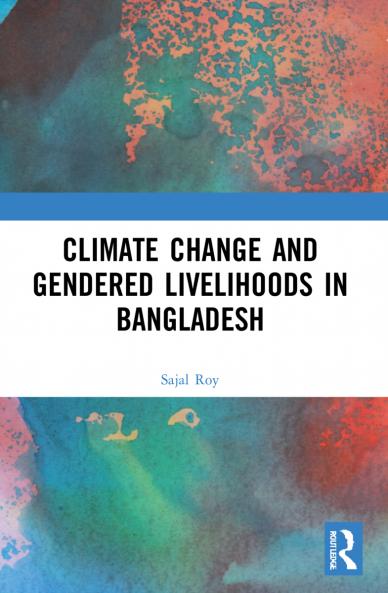
<p>Globally climate-induced disasters have been impacting marginalised communities’ lives livelihood and gendered relations. This book explores the effects of Cyclone Aila (as a result of climate change) in 2009 on the rural livelihoods and gendered relations of two ethnically distinct forest communities – Munda an indigenous group and Shora a Muslim group – dwelling near the Sundarbans Forest in Bangladesh. </p><p>Examining the cyclone’s medium- to long-term impacts on livelihoods and comparative aspects of gendered relations between these two contrasting communities this book addresses a gap in current critical development studies. It adopts an ethnographic research design and analyses the alterations to livelihood activities and reconfiguration of gender relations within the Munda and Shora communities since 2009. The study primarily contends that post-Aila livelihoods and gendered relations have been substantially transformed in both communities making the case that the improvement of local infrastructure as an important part of the geographical location has noticeably progressed the living conditions and livelihoods of some members of the Munda and Shora communities. </p><p>Connecting climate-induced changes with the construction and alteration of gendered livelihood patterns the book will be of interest to a wide range of academics in the fields of Asian Studies Sociology of Environment Social Anthropology Human Geography Gender and Cultural Studies Human Geography Disaster Management and Forestry and Environmental Science.</p>
Piracy-free
Assured Quality
Secure Transactions
*COD & Shipping Charges may apply on certain items.
Review final details at checkout.
₹4020
₹4976
19% OFF
Paperback
Out Of Stock
All inclusive*
Details
ISBN 13
9781032005911
Publication Date
-25-09-2023
Pages
-242
Weight
-350 grams
Dimensions
-155.96x233.93x13.03 mm
