


This Book is Out of Stock!
by



Hardback
₹5005
₹6280
20.3% OFF
(All inclusive*)
Delivery Options
*COD & Shipping Charges may apply on certain items.
Review final details at checkout.
Looking to place a bulk order? SUBMIT DETAILS

Piracy-free

Assured Quality

Secure Transactions
About The Book
Description
Author
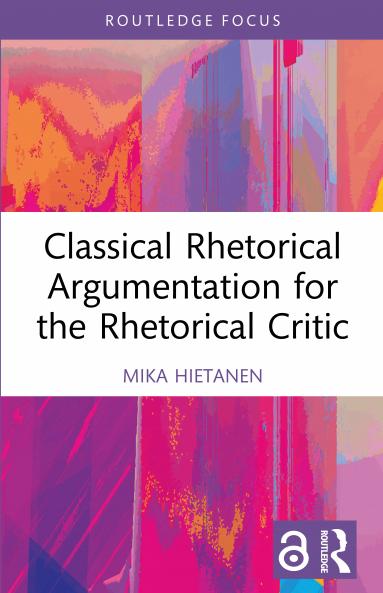
<p>This book offers a reassessment of argumentation in classical rhetoric foregrounding its rational dimension. Moving beyond introductions it provides insights from Aristotle Quintilian and other ancient thinkers while addressing common misconceptions and offering clarifications that are particularly valuable for the rhetorical critic.</p><p>Adopting a Scandinavian rhetorical perspective this book argues that classical rhetoric offers enduring tools for both the analysis and the construction of persuasive argumentation. By bridging theory and practice it demonstrates how classical rhetoric remains highly relevant while also naturally integrating with analyses that focus on classical concepts such as <i>ethos</i> <i>pathos</i> or style – whether through neo‑Aristotelian methods or contemporary approaches rooted in the classical rhetorical tradition. Key concepts are explored in dedicated chapters: the ‘art’ of <i>logos</i>‑based argumentation is reassessed; enthymeme and epicheireme structures are examined; and <i>topoi </i>and <i>staseis </i>are discussed in relation to their later developments. A chapter on the centenary of rhetorical criticism traces its evolution from Herbert Wichelns (1925) to today proposing a new template for the rhetorical critic.</p><p>This concise yet comprehensive book will interest intermediate and advanced students as well as scholars of rhetoric argumentation persuasion speech and writing studies and communication studies.</p>
Piracy-free
Assured Quality
Secure Transactions
*COD & Shipping Charges may apply on certain items.
Review final details at checkout.
₹5005
₹6280
20% OFF
Hardback
Out Of Stock
All inclusive*
Details
ISBN 13
9781032612539
Publication Date
-07-07-2025
Pages
-162
Weight
-270 grams
Dimensions
-137.92x215.9x10.32 mm
