




This Book is Out of Stock!
by



Paperback
₹499
(All inclusive*)
Delivery Options
*COD & Shipping Charges may apply on certain items.
Review final details at checkout.
Looking to place a bulk order? SUBMIT DETAILS

Piracy-free

Assured Quality

Secure Transactions
About The Book
Description
Author
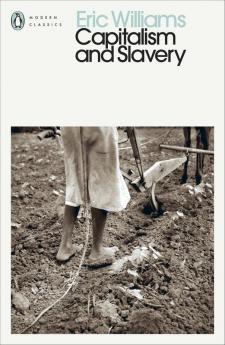
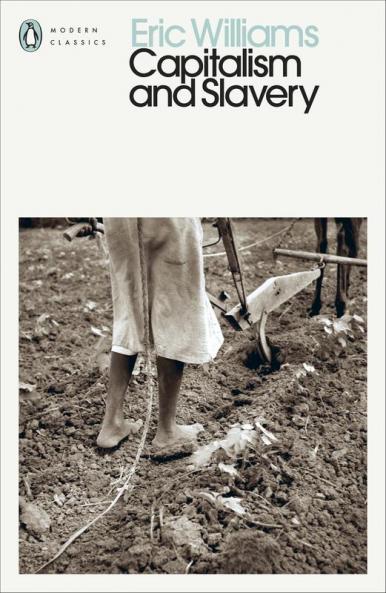
<b>Eric Williams</b> (1911-1981) was a pioneering historian and politician born in Port of Spain Trinidad and Tobago. He graduated with first-class honours from St Catherine's College Oxford in 1935 and completed a DPhil in History in 1938. His dissertation 'The Economic Aspects of the Abolition of the Slave Trade' was published as <i>Capitalism and Slavery </i>in 1944 while he was a professor at Howard University. In 1956 Williams founded the Republic of Trinidad and Tobago's first modern political party. He led the country to independence from the British and became the nation's first prime minister in 1962. <b>A classic critique</b> <b>Groundbreaking</b> <b>A landmark study</b> <b>It's often said that books are compulsory reading but this book really is compulsory. You cannot understand slavery or British Empire without it.</b> <b>This book recommended to me by a Jamaican fellow-student in 1968 changed my view of the world. It was the first time I was brought up hard and fast face to face with how modern Britain developed off the back of the transatlantic slave trade and the wealth created from the labour of slavery </b> <b>The slave trade built capital for the slave-owning Empire on which the Industrial Revolution was formed. The slave trade was abolished not because of moral outrage but because of a decline in returns. Slavery and capitalism are linked and Williams launches a full frontal attack on it in this classic which first appeared almost a century ago. Essential reading for anyone who wishes to know more about the Caribbean.</b> <b>Wherever you stand on the legacies of slavery and colonialism Williams' elegant passionate analysis is simply inescapable. Essential reading for anyone who really cares about history.</b> <b>A vital urgent read. A forensic examination of the system behind systemic racism. Eric Williams succinctly sets out how racism and all its implications injustices and inhumanities was a harrowing repercussion of slavery invented as a justification for lining a few dead men's pockets</b> <b>There can be no effective understanding of modernity and the post-colonial world without an engagement with Eric Williams' <i>Capitalism and Slavery</i>. This is where the rubber hits the road.</b> <b>No historian of colonialism or slavery can ignore Eric Williams. This book endures as a seminal moment in the historiography of the British Empire</b> <b>Groundbreaking and inspiring - a gripping brilliantly original analysis of British slavery racism and the enduring legacies of imperialism</b> <b>Since <i>Capitalism and Slavery</i> was first published some eighty years ago no writer on the subject has been able to ignore it. It is a true classic</b> <b>A superb book about the history of the transatlantic slave trade that basically became a manifesto for the independence of Williams's own country ... Williams is an extraordinary figure particularly if you're interested in the way certain kinds of observations of injustice can motivate research by historians that ultimately lead to massive political change.</b> <b>Few books stand the test of time and remain a catalyst for continuing historiographical debate. <i>Capitalism and Slavery</i> on all accounts is one of these rare books</b>. <b><i>Capitalism and Slavery</i> sparked a scholarly conversation that has yet to die down. In many ways the debates it generated are more vibrant now than ever and promise to be a lasting touchstone for historians well into the future.</b> <b>Few works of history have exerted as powerful an influence as </b><i><b>Capitalism and Slavery</b></i>. <b>W</b><b>illiams's masterwork is so rich with ideas and historical insights that it still speaks to today's historiography.</b> <b>It is a work of conceptual brilliance intellectually mature bold incisive and immensely provocative... <i>Capitalism and Slavery</i> will remain a historical treasure</b>. <b>One of the most learned most penetrating and most significant [pieces of work] that has appeared in this field of history.</b> <b>Eric Williams's study identifies many of the sinners and the sins committed in the building of British and global capitalism ... <i>Capitalism and Slavery </i>makes us stare down that history and compels us to seek redress from the relevant culpable parties</b> <p><b>'It's often said that books are compulsory reading but this book really is compulsory. You cannot understand slavery or British Empire without it' Sathnam Sanghera</b><br><b> <br>Arguing that the slave trade was at the heart of Britain's economic progress Eric Williams's landmark 1944 study revealed the connections between capitalism and racism and has influenced generations of historians ever since.</b><br><br>Williams traces the rise and fall of the Atlantic slave trade through the eighteenth and nineteenth centuries to show how it laid the foundations of the Industrial Revolution and how racism arose as a means of rationalising an economic decision. Most significantly he showed how slavery was only abolished when it ceased to become financially viable exploding the myth of emancipation as a mark of Britain's moral progress.<br><br>'Its thesis is a starting point for a new generation of scholarship' <i>New Yorker</i></p> <p><b>'It's often said that books are compulsory reading but this book really is compulsory. You cannot understand slavery or British Empire without it' Sathnam Sanghera</b><br><b> <br>Arguing that the slave trade was at the heart of Britain's economic progress Eric Williams's landmark 1944 study revealed the connections between capitalism and racism and has influenced generations of historians ever since.</b><br><br>Williams traces the rise and fall of the Atlantic slave trade through the eighteenth and nineteenth centuries to show how it laid the foundations of the Industrial Revolution and how racism arose as a means of rationalising an economic decision. Most significantly he showed how slavery was only abolished when it ceased to become financially viable exploding the myth of emancipation as a mark of Britain's moral progress.<br><br>'Its thesis is a starting point for a new generation of scholarship' <i>New Yorker</i></p>
Piracy-free
Assured Quality
Secure Transactions
*COD & Shipping Charges may apply on certain items.
Review final details at checkout.
₹499
Out Of Stock
All inclusive*
Details
ISBN 13
9780241548165
Publication Date
-24-02-2022
Pages
-304
Weight
-215 grams
Dimensions
-129x198x18.38 mm
