





This Book is Out of Stock!
by
English



Paperback
₹3683
₹4621
20.3% OFF
(All inclusive*)
Delivery Options
*COD & Shipping Charges may apply on certain items.
Review final details at checkout.
Looking to place a bulk order? SUBMIT DETAILS

Piracy-free

Assured Quality

Secure Transactions
About The Book
Description
Author
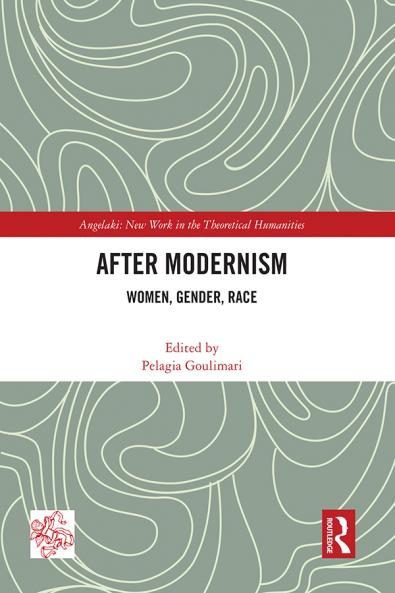
<p>While celebrating the centenary of the “annus mirabilis” of modernism we now encounter <i>modernism </i><i>after</i> postmodernist poststructuralist postcolonial critical race feminist queer and trans writing and theory. Out of the figures narratives and concepts they have developed a less universal more global decentred context-specific interconnected modernism emerges.</p><p>In “after modernism” the meanings of “after” include periodisation homage <i>and</i> critique. This book attends to neglected genealogies and intertexts—“high” and “low” yet offering unacknowledged ontological epistemological conceptual and figurative resources. How have artists of the Global South negotiated the hierarchical division of art capital into Western high art vs. Global-South culture?</p><p>Modernity’s location has been the Western metropolis but other origin stories have been centring slavery colonialism the nation-state. If modernity did not originate once why not multiple and still-to-come modernities? Instead of a universalizable Western modernity vs. local non-Western traditions the contributors to this book discern multiple modern traditions. Rather than reifying their heterogeneity the authors tunnel for lost transnational connections.</p><p>The nation-state and the citizen have together defined Western modernity and the “civilized.” Yet they have required the gender binary gender and sexual normativity assimilation exclusion forced migration partition segregation. In-between the public and the private humans and the natural world this book explores a multiple relational modern subjectivity collectivity and cosmic interconnectivity whose space is indivisible entangled ever folding and unfolding. It was originally published as a special issue of the journal <i>Angelaki</i>.</p>
Piracy-free
Assured Quality
Secure Transactions
*COD & Shipping Charges may apply on certain items.
Review final details at checkout.
₹3683
₹4621
20% OFF
Paperback
Out Of Stock
All inclusive*
Details
ISBN 13
9781032443508
Publication Date
-09-10-2024
Pages
-272
Weight
-458 grams
Dimensions
-173.99x246.13x14.57 mm
